

Adobe Journey Optimizer: Better Email Campaigns Need Real-Time Workflows
Most businesses know they should communicate with customers more consistently. The hard part is doing it well.
A customer who just asked for a quote should not receive the same message as someone who bought last week. A prospect who clicked on a service page may need a different follow-up from a client who has ignored three newsletters. When every contact gets the same broadcast email, marketing becomes noisy and easy to ignore.
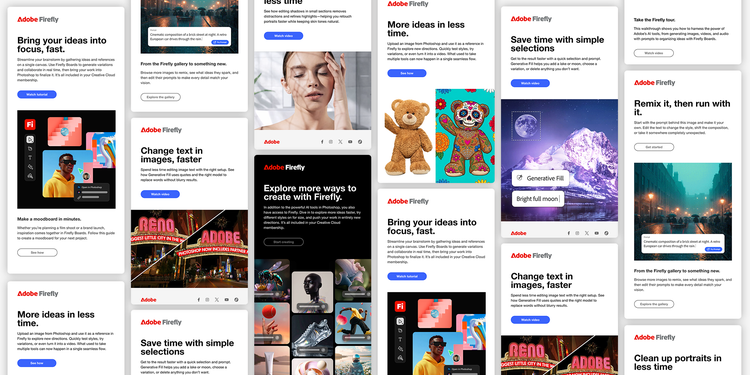
Adobe recently shared how its own marketing team uses Adobe Journey Optimizer to move from broad email blasts to real-time personalized customer journeys. The article is written around Adobe's internal use case, but the lesson is practical for small and mid-sized businesses in Trinidad and Tobago: better email marketing depends on workflow, data, timing, and control, not just nicer templates.
The Shift From Blasts to Journeys
Traditional email marketing often starts with a list, a campaign, and a send date. That can work for simple announcements, but it does not adapt to what customers actually do.
Adobe Journey Optimizer is designed for more responsive campaign orchestration. Adobe describes teams using real-time behavioural signals to segment customers after each round of emails, adjust the next message, and test campaign paths more quickly. In Adobe's case, the company reports faster testing cycles and stronger engagement for some Creative Cloud campaigns.
For an SMB, the same principle can be scaled down:
- new leads receive helpful onboarding instead of generic sales pressure
- repeat customers get relevant product or service follow-ups
- inactive customers receive a different message from active buyers
- abandoned quote or cart workflows trigger timely reminders
- campaign results feed the next decision instead of sitting in a report
That is the difference between sending email and managing a customer journey.
Why This Matters Locally
Many local businesses already have the pieces: a website, forms, social media, customer lists, WhatsApp conversations, invoices, and maybe a CRM. The problem is that those pieces are often disconnected.
When customer data is scattered, marketing becomes manual. Staff export spreadsheets, copy addresses, send one-off messages, and guess which campaign worked. As the business grows, that approach becomes hard to manage and easy to get wrong.
Journey-based marketing gives the business a more disciplined model. The team defines the customer stages, decides what should happen next, measures the response, and improves the workflow over time.
This can support:
- retail promotions and loyalty campaigns
- appointment reminders and service follow-ups
- quote follow-up sequences
- event invitations and post-event nurture
- software, training, or subscription onboarding
- client education campaigns
- renewal and upsell communication
The goal is not to send more emails. The goal is to send more useful communication at the right point in the relationship.
The Technology Needs Guardrails
Personalization only works when the business handles data properly. Before adopting a platform like Adobe Journey Optimizer, a company should review the basics:
- where customer data is stored
- who can access marketing lists
- how contacts give consent
- how unsubscribes are handled
- which systems feed campaign data
- who approves customer-facing messages
- how reports are reviewed
- what happens when staff leave or roles change
This matters for trust. Customers may appreciate relevant communication, but they do not want careless handling of their information.
For many SMBs, the first step is not a complex enterprise rollout. It is cleaning up customer records, standardising campaign lists, connecting the right tools, and building a few simple journeys that staff can manage confidently.
Where Blue Chip Can Help
Blue Chip Technologies helps businesses make marketing and productivity tools work as part of the wider IT environment.
For Adobe Journey Optimizer, Adobe Experience Cloud, CRM, email marketing, and workflow projects, that can include:
- reviewing current customer communication processes
- helping clean up and structure customer lists
- aligning campaign tools with Microsoft 365, websites, forms, CRM, and reporting
- supporting secure access, user roles, and offboarding
- advising on data handling and workflow controls
- helping teams document approval steps before campaigns go live
- supporting the devices, browsers, accounts, and integrations staff rely on
The business value is not just the software license. It is the operating model around it: cleaner data, clearer ownership, faster campaign learning, and fewer manual handoffs.
If your team is still sending the same email to everyone, or manually chasing every lead, now is a good time to review the workflow. Better customer journeys start with organized data and practical controls.
Source: Adobe Blog, How Adobe transformed its email marketing with Adobe Journey Optimizer.