
Adobe Substance 3D: Digital Twins Can Speed Up Product Marketing
Product photos, showroom visuals, catalog images, packaging concepts, and launch graphics usually arrive late because businesses wait for the physical item first. That delay is normal, but it is expensive. Marketing waits. Sales waits. Management waits for approvals. Then everyone rushes once samples finally land.
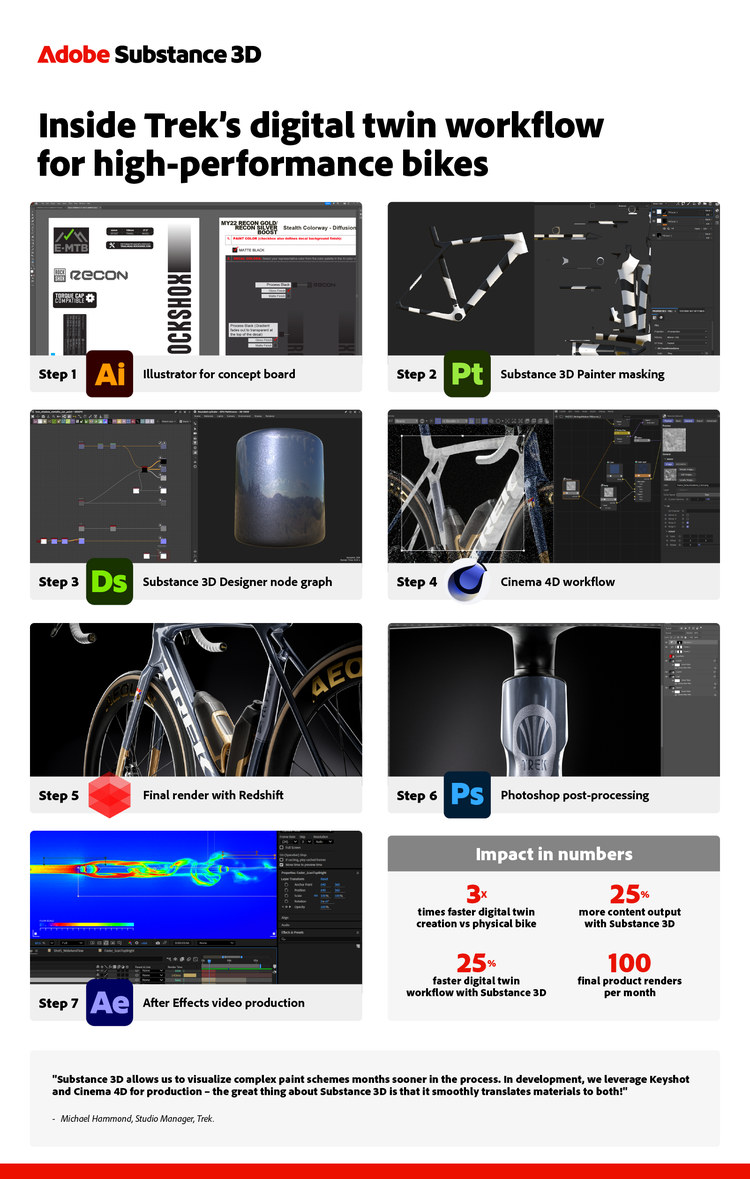
Adobe's latest customer story on Trek shows a different model. Trek uses Adobe Substance 3D as part of a digital twin workflow, creating highly realistic virtual versions of bikes for design review, production planning, launch content, and marketing. Adobe reports that Trek creates digital twins up to three times faster than physical versions and has increased content output by 25 percent with Substance 3D.
Most Trinidad and Tobago SMBs are not building a full enterprise 3D pipeline. But the lesson is still useful: when products, finishes, signage, spaces, or equipment can be visualised earlier, teams make decisions earlier.

What a digital twin means in business terms
A digital twin is a detailed virtual version of a real product or environment. In this kind of creative workflow, the model is not just a rough mockup. It carries enough visual accuracy for teams to review finishes, materials, colours, decals, packaging, lighting, and campaign presentation before the physical version is ready.
For a small or mid-sized business, that can support practical work such as:
- product launch visuals before shipment arrives
- packaging and label reviews before printing
- retail display and showroom mockups
- furniture, interior, construction, or signage finish options
- equipment visuals for training or proposals
- e-commerce images for product variants
- campaign visuals for multiple colours, sizes, or bundles
The goal is not to replace every photoshoot. The goal is to reduce the waiting and rework around decisions that could have been made earlier.
Why Adobe Substance 3D matters
Substance 3D is Adobe's toolset for creating and managing realistic 3D materials, textures, and product visuals. In Trek's workflow, Substance 3D connects with tools such as Illustrator, Photoshop, After Effects, Premiere, Cinema 4D, and Redshift. The important business point is that the workflow lets teams reuse assets, adjust materials, and produce consistent visuals at scale.
That matters because product marketing often breaks down when every visual is treated as a separate one-off file. If a team can reuse the same approved materials, model parts, colour options, and render setup, each new campaign does not have to start from zero.
The SMB version does not need to be overbuilt
For local businesses, the right starting point is usually one controlled workflow, not a giant 3D transformation project.
A retailer might begin with key product families. A manufacturer might start with packaging or label variations. A construction or interiors company might start with finish previews. A marketing team might build reusable product scenes for seasonal promotions.
The business should define:
- which product or service needs better visuals
- who owns the source files
- which Adobe licences are needed
- where approved assets are stored
- who signs off before publishing or printing
- how large files are backed up
- which outputs are needed for web, social, proposals, and print
Those controls matter as much as the software. A beautiful render is not much help if nobody can find the approved file next quarter.
Where Blue Chip can help
Blue Chip Technologies can help businesses put the IT and workflow structure around Adobe creative tools. That can include Adobe licensing guidance, Creative Cloud user setup, workstation readiness, secure storage planning, backup, Microsoft 365 or Google Workspace folder structure, access reviews, and support for staff using Adobe applications.
For teams working with designers, agencies, printers, or contractors, Blue Chip can also help keep ownership clear. Company files should live in company-controlled storage, with proper access, backup, and offboarding.
Faster visuals need managed files
Adobe's Trek story is a strong example of where product visualisation is heading. The technology can help businesses review ideas sooner, produce more marketing assets, and keep visual quality consistent across channels.
The next step for SMBs is practical: identify the product visuals that slow your team down, then make sure the Adobe licences, devices, storage, approval process, and support model are ready before the workflow grows.
If your team already uses Photoshop, Illustrator, Premiere, or other Creative Cloud tools, Substance 3D may be worth reviewing as part of a broader product marketing workflow. The software can speed up the visuals, but the business still needs control over files, approvals, and access.
Source: Adobe Blog, How Trek uses Adobe Substance 3D to create digital twins for their high-performance bikes.