Disclosure: This article contains BLUETTI affiliate links. If you buy through those links, Blue Chip Technologies may earn a commission at no extra cost to you. Blue Chip Technologies is a BLUETTI customer, not an installer, and this article is written from a practical customer perspective.
Shop BLUETTI using Blue Chip's referral link
Plan for the essentials first
Power outages are not abstract in the Caribbean. The useful question is not whether a battery system sounds impressive; it is what it can realistically keep running, how it will be recharged, and who should handle electrical integration safely.
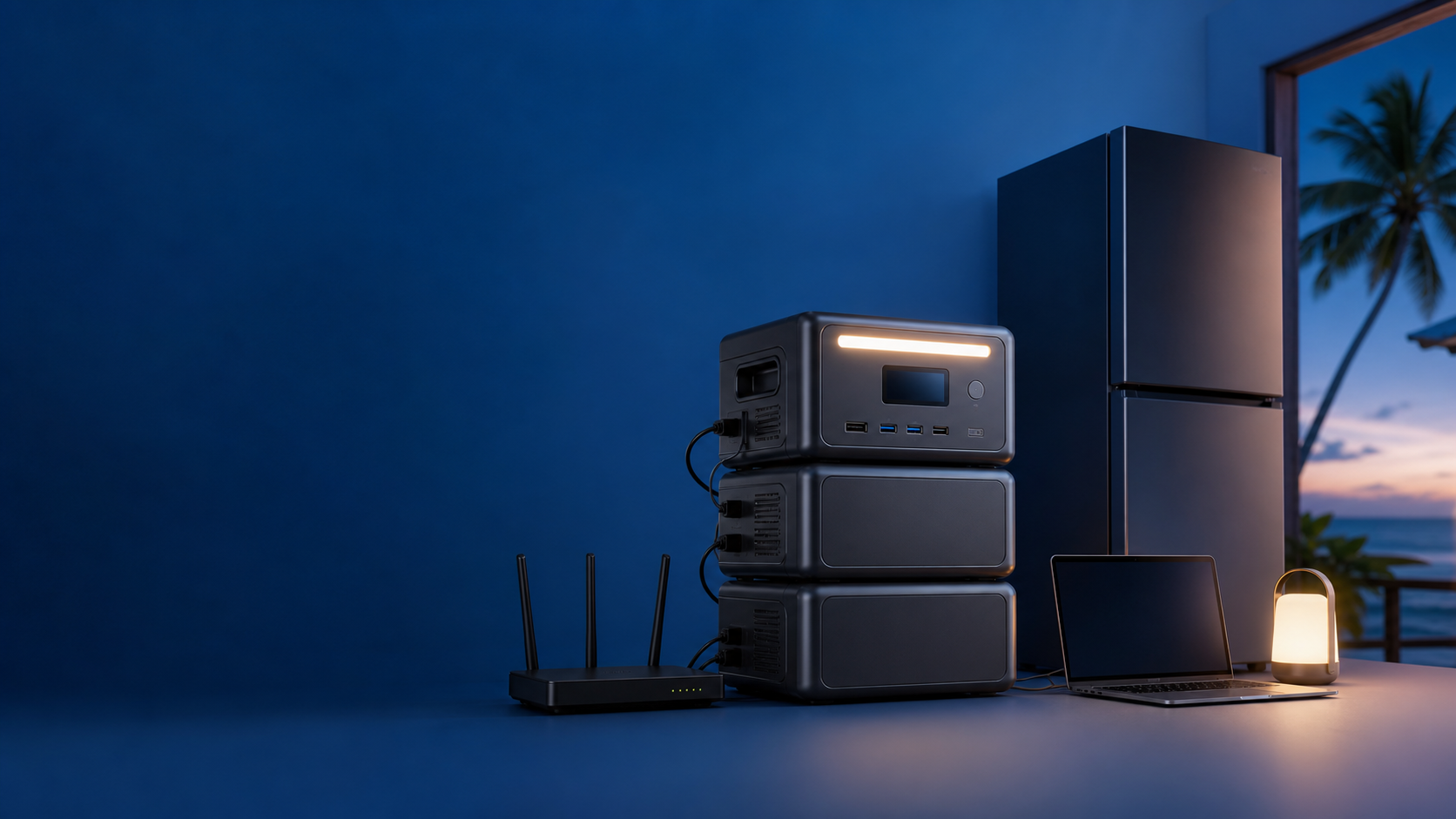
BLUETTI positions the AC300 + B300 as a modular home battery-backup system with a 3,000 W pure-sine-wave inverter, expandable battery capacity and multiple recharge methods. For a home office or small-business continuity plan, that points to essentials first: router, laptop, phones, lights, refrigeration and selected medical or operational devices.
Do the load calculation
It should not be sold as a magic whole-building answer without a load calculation and qualified electrical guidance. Make a short list of the devices that need to stay on, check their wattage, decide on a realistic runtime, and allow margin for charging and changing loads.
A properly sized BLUETTI setup can reduce disruption during outages, especially for communications and low-to-medium-power essentials. Customers should still follow BLUETTI guidance and use qualified electricians for transfer switches, panels or other fixed electrical work.
Make backup power part of continuity planning
Backup power works best as one part of a wider continuity plan: identify critical equipment, decide what must remain online, choose a recharge method, and test the setup before an outage. Blue Chip Technologies can help you think through the IT systems that should stay online; we do not provide electrical installation.