Sales Quotes Need Spreadsheet Speed With Business Controls
Many businesses still trust spreadsheets for quoting because they are fast, familiar, and easy to scan. Sales teams know how to move through rows, adjust quantities, compare prices, and check totals without opening five different screens.
The problem is not the grid. The problem is when the grid is just a spreadsheet.
As quotes become more complex, businesses need the speed of a spreadsheet with the controls of a proper quoting system. That is the practical lesson behind QuoteWerks' discussion of its grid-based CPQ approach.

Why Spreadsheet-Style Quoting Feels Natural
Most sales and operations teams already think in line items. A quote is rarely just one product or one service. It may include equipment, software licences, installation labour, delivery, recurring support, optional add-ons, taxes, and discounts.
Rows and columns make that easy to review.
For Trinidad and Tobago SMBs, this matters because many teams are lean. The same person may be preparing the quote, checking supplier costs, discussing delivery, and following up with the customer. If the quoting screen hides too much information, mistakes become easier.
A grid view helps the user see the commercial picture quickly:
- What is being sold
- Quantity and unit price
- Supplier or internal cost
- Gross profit and margin
- Optional items
- Totals and subtotals
- Notes or custom fields needed for fulfilment
That visibility is useful. But visibility alone is not enough.
Where Ordinary Spreadsheets Create Risk
Spreadsheets are flexible, but that flexibility can become a control problem.
Common quoting risks include:
- Old product prices copied from a previous quote
- Broken formulas or hidden rows
- Discounts applied without approval
- Supplier costs updated in one file but not another
- Multiple versions called "final"
- Margin information sent to the wrong person
- No reliable audit trail of who changed what
- Manual re-entry into CRM, accounting, purchasing, or order fulfilment systems
These are not small issues. They affect profit, customer confidence, procurement accuracy, and cash flow.
When quoting is informal, the business depends too much on memory and individual discipline. A proper CPQ system gives the team structure without removing the speed they like.
What QuoteWerks Adds Around the Grid
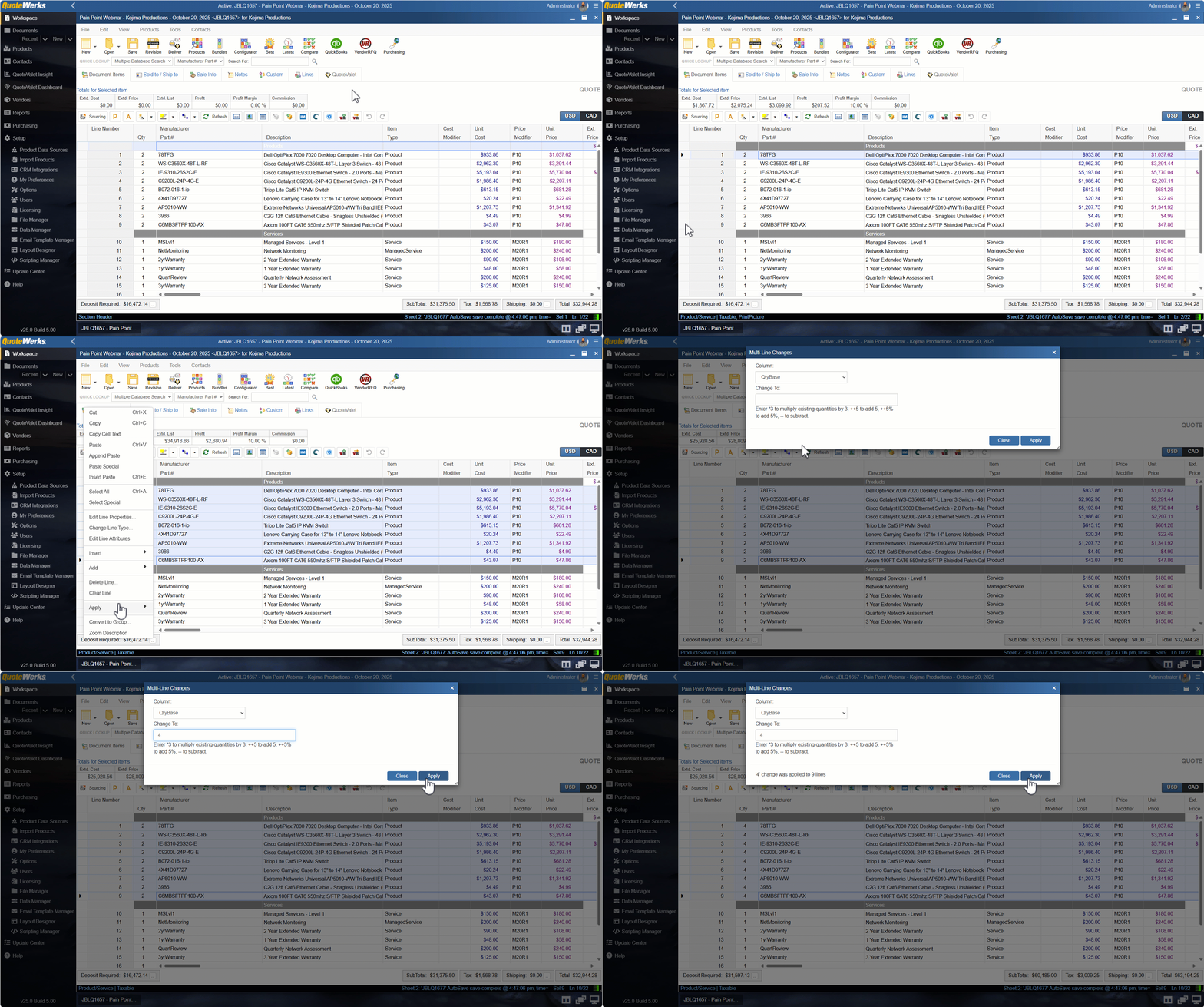
QuoteWerks keeps the familiar grid-style quoting experience, but wraps it with business controls.
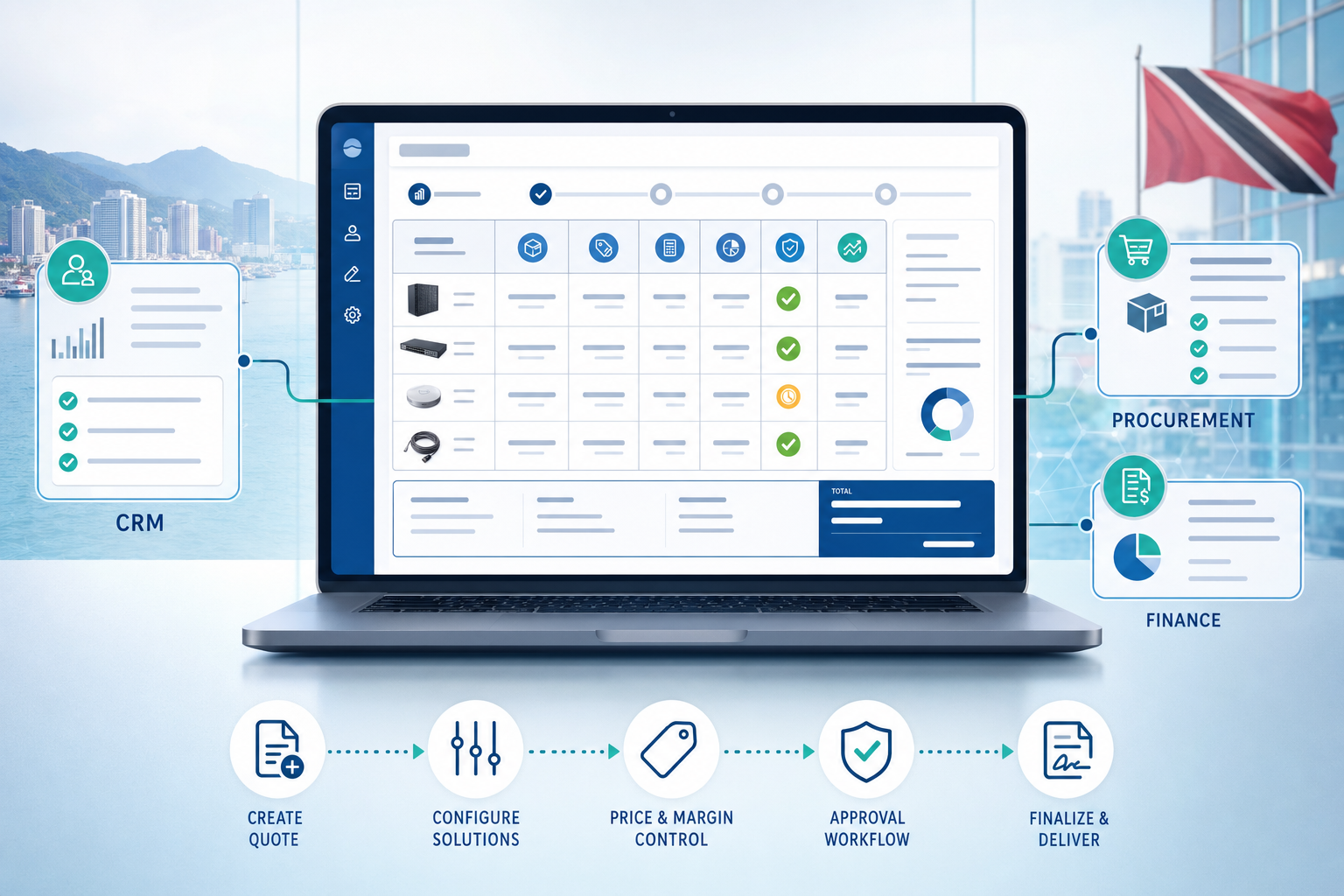
That can include controlled product data, pricing rules, cost visibility, margin checks, quote versioning, audit history, approval workflows, customer acceptance through QuoteValet, payment options, purchasing/procurement handoff, and CRM integrations.
In plain terms, the sales rep still works quickly, but the business gets better guardrails.
A Practical SMB Example
Consider a company quoting a network upgrade.
The proposal may include switches, firewalls, wireless access points, cabling, licence terms, configuration labour, warranty options, monthly monitoring, and optional backup internet. Some items may come from different suppliers. Some prices may change weekly. Some discounts may need management approval.
If that quote is built in an ordinary spreadsheet, the team can move fast — but they also carry a lot of risk.
With QuoteWerks, the same quote can be built in a familiar line-item style while keeping pricing, margin, approvals, and downstream workflow under better control.
That is the difference between a quote document and a quoting process.
Better Quoting Helps More Than Sales
Quoting touches several parts of the business:
- Sales needs speed and professional proposals
- Management needs margin and approval control
- Procurement needs accurate items and quantities
- Finance needs cleaner handoff to invoicing or payment
- Operations needs to know exactly what was promised
- Customers need clear choices and confidence in the offer
When quoting is messy, every department feels it later.
A controlled CPQ workflow reduces that friction. It helps the team standardize what should be standard, while still allowing flexibility where the deal genuinely needs it.
The Blue Chip View
Blue Chip's view is simple: do not mistake spreadsheet familiarity for spreadsheet safety.
If your team likes rows and columns, that is fine. The goal is not to force everyone into a slow, over-designed tool. The goal is to keep the quoting workflow fast while adding proper controls around pricing, approvals, versioning, CRM updates, customer acceptance, and procurement handoff.
QuoteWerks is a strong fit for businesses that have outgrown manual quoting but still need a practical workflow their sales team will actually use.
Blue Chip Technologies can help review your current quoting process, identify where errors or delays are happening, and design a QuoteWerks workflow that supports your sales, finance, and operations teams.
Source: QuoteWerks Blog — The Grid Advantage: Why Your CPQ Should Feel Like a Spreadsheet and Perform Like a Power Tool.