
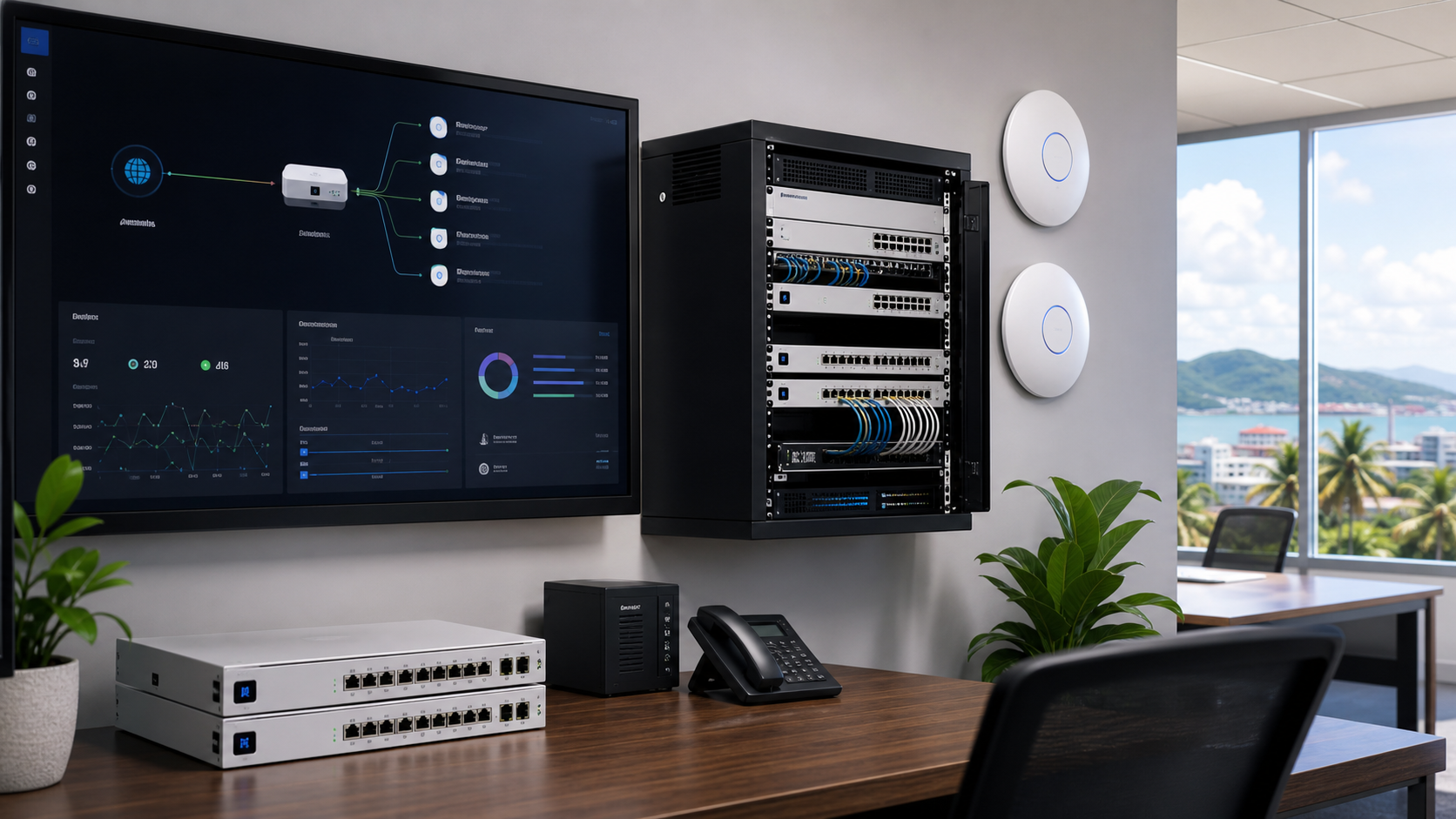
Business networks are under more pressure than they used to be. A small office may now depend on cloud accounting, VoIP calls, Wi-Fi, cameras, VPN access, guest networks, payment systems, and remote support all at the same time. When the network is hard to see or hard to control, small issues turn into long support calls.
Ubiquiti's UniFi Network 10.4 announcement is useful because it focuses on the operational side of networking: routing, IPv6 readiness, topology history, cellular backup visibility, UPS behaviour, and Site Manager orchestration. Those are not just enterprise talking points. They matter for Trinidad and Tobago businesses that need reliable systems without turning every branch or department into a one-off setup.
Routing is becoming part of everyday network planning
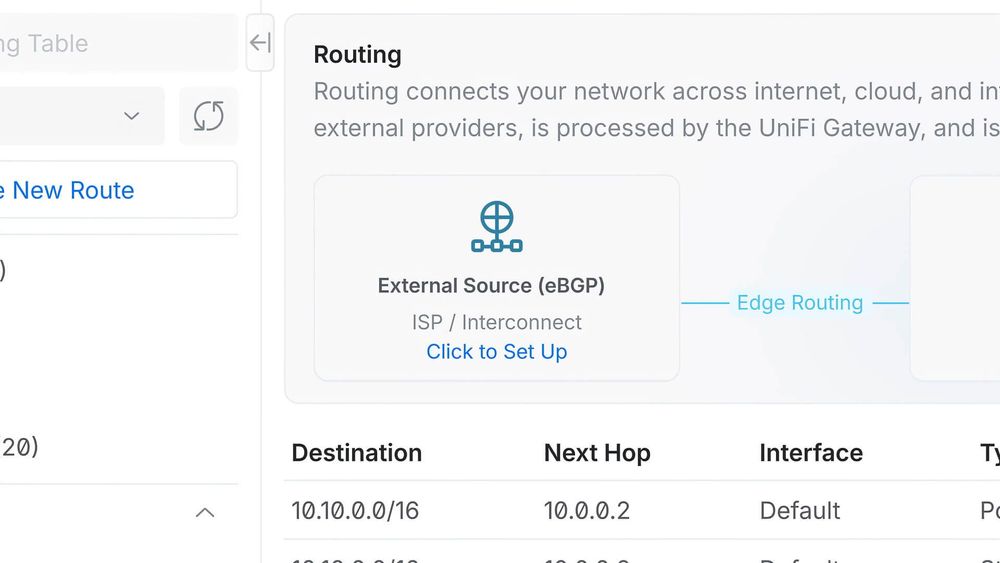
UniFi Network 10.4 adds more advanced routing capability, including eBGP for ISP peering and clearer visibility into internal routing areas. For many SMBs, that may sound far beyond the current network. But the direction matters.
As businesses add second internet links, branch offices, cloud services, VPNs, and segmented networks, routing decisions become more important. The question is no longer only "does the internet work?" It becomes:
- Which link should critical traffic use?
- How should branches reach shared systems?
- What happens when an ISP route fails?
- Can support see the route instead of guessing?
IPv6 and VPN support are becoming practical requirements
IPv6 is not usually the first thing a business owner asks about, but it is becoming more relevant as ISPs modernise their networks and as remote access requirements change. UniFi Network 10.4 improves IPv6 awareness, including automatic dual-stack detection and WireGuard VPN support over IPv6.
That matters locally because many businesses have to work with whatever connectivity is available at a specific site. Some locations have fibre. Some rely on wireless or LTE/5G options. Some sit behind carrier-grade NAT. A managed network platform that can clearly show connectivity options and support modern VPN methods gives the IT team more room to build something dependable.
Topology history makes troubleshooting less reactive
One of the more practical updates is historical visibility inside the topology view. In plain terms, support can better understand how devices were connected and when something changed.
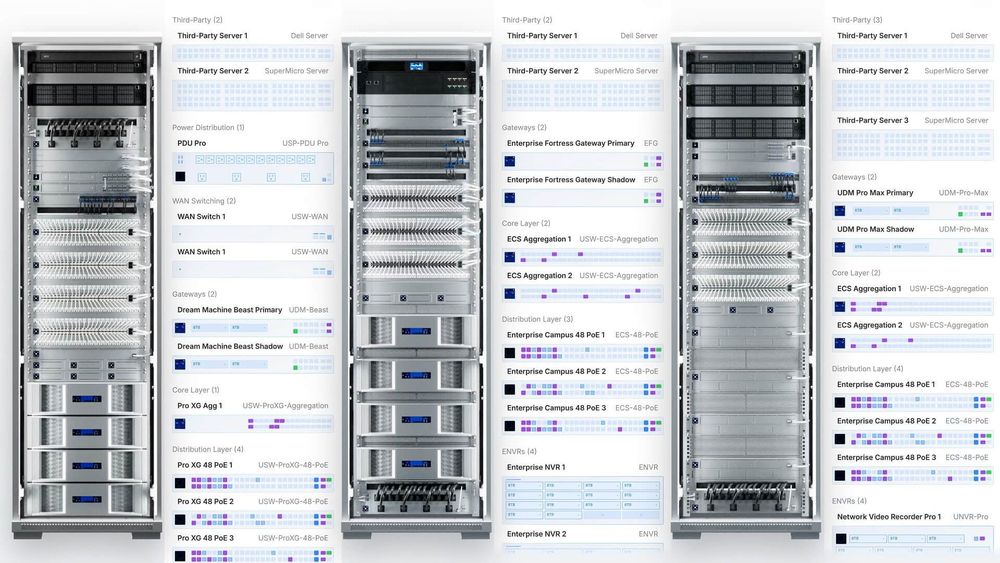
That is valuable because network problems often appear after a small change: a cable moved, a switch uplink changed, a third-party appliance was added, a PoE device started drawing more power, or a branch device went offline. If the management platform can show what changed, troubleshooting becomes faster and less dependent on guesswork.
Backup links and UPS behaviour need visibility
Resilience is not only about buying backup hardware. It is about knowing whether that backup path is healthy before the main connection fails.
UniFi Network 10.4 adds deeper 4G/5G telemetry for supported UniFi cellular devices and more control around UPS battery thresholds. For a business, that can help answer important questions before an outage:
- Is the backup cellular link ready?
- Is signal quality strong enough for the site?
- Will the UPS ride through short power drops?
- Should the system shut down or stay online during a longer outage?
For locations affected by ISP instability or power interruptions, those details can make the difference between a controlled failover and a blind scramble.
Multi-site orchestration is where MSP value becomes clearer
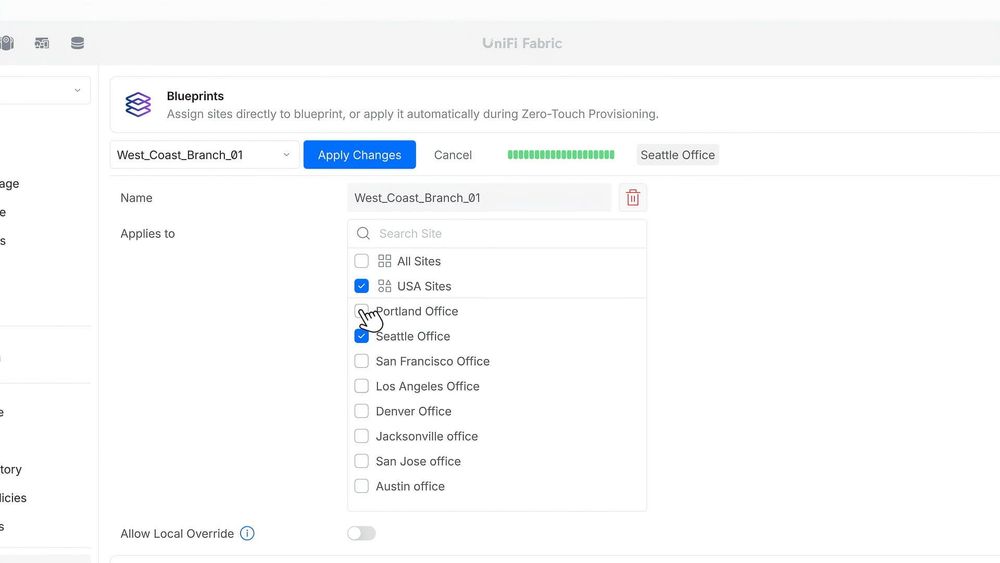
Ubiquiti also highlighted blueprint synchronisation in Site Manager. The practical idea is simple: configure standards once, then apply them more consistently across sites.
For an MSP-managed environment, that can reduce drift. Guest Wi-Fi, VLANs, DNS policies, firewall rules, and branch standards are easier to maintain when each site follows a repeatable model. That does not remove the need for good design, documentation, and change control, but it does make standardisation more achievable for growing businesses.
What this means for Blue Chip customers
For Blue Chip Technologies, the value in UniFi Network 10.4 is not one single feature. It is the direction: more visibility, more resilience, and better tools for operating networks across real business environments.
For Trinidad and Tobago SMBs, that applies to offices, schools, warehouses, retail branches, clinics, hospitality sites, and multi-tenant spaces where the network supports daily operations. The right setup should include proper gateway sizing, VLAN planning, Wi-Fi design, switch and PoE planning, backup connectivity, documentation, monitoring, and ongoing support.
Blue Chip Technologies designs, deploys, documents, and supports UniFi networks as managed infrastructure. If your business is adding branches, improving Wi-Fi, planning better backup internet, or trying to make the network easier to support, UniFi's newer management features can be part of a practical plan.
Source: Ubiquiti Blog, Introducing UniFi Network 10.4, published 19 May 2026.