Synology recently highlighted three Backup-as-a-Service and Disaster-Recovery-as-a-Service features MSPs often underuse: disaster recovery testing, long-term retention, and off-site backups. The original Synology article is here: https://blog.synology.com/apa-3-overlooked-baas-draas-features-msps-can-monetize-without-additional-costs.

Synology's source article focuses on recovery testing, long-term retention, and off-site backup as service features that create real resilience.
A Backup Service Should Not Be Judged by Copies Alone
For many Trinidad and Tobago businesses, backup is still treated as a quiet background task. Files copy somewhere, a dashboard looks green, and everyone hopes the restore will work when it matters.
That is not enough anymore.
Ransomware, accidental deletion, failed hardware, cloud account mistakes, and site outages all test the same question: can the business recover quickly, from a clean copy, with enough confidence to keep operating?
Three Things Clients Should Ask For
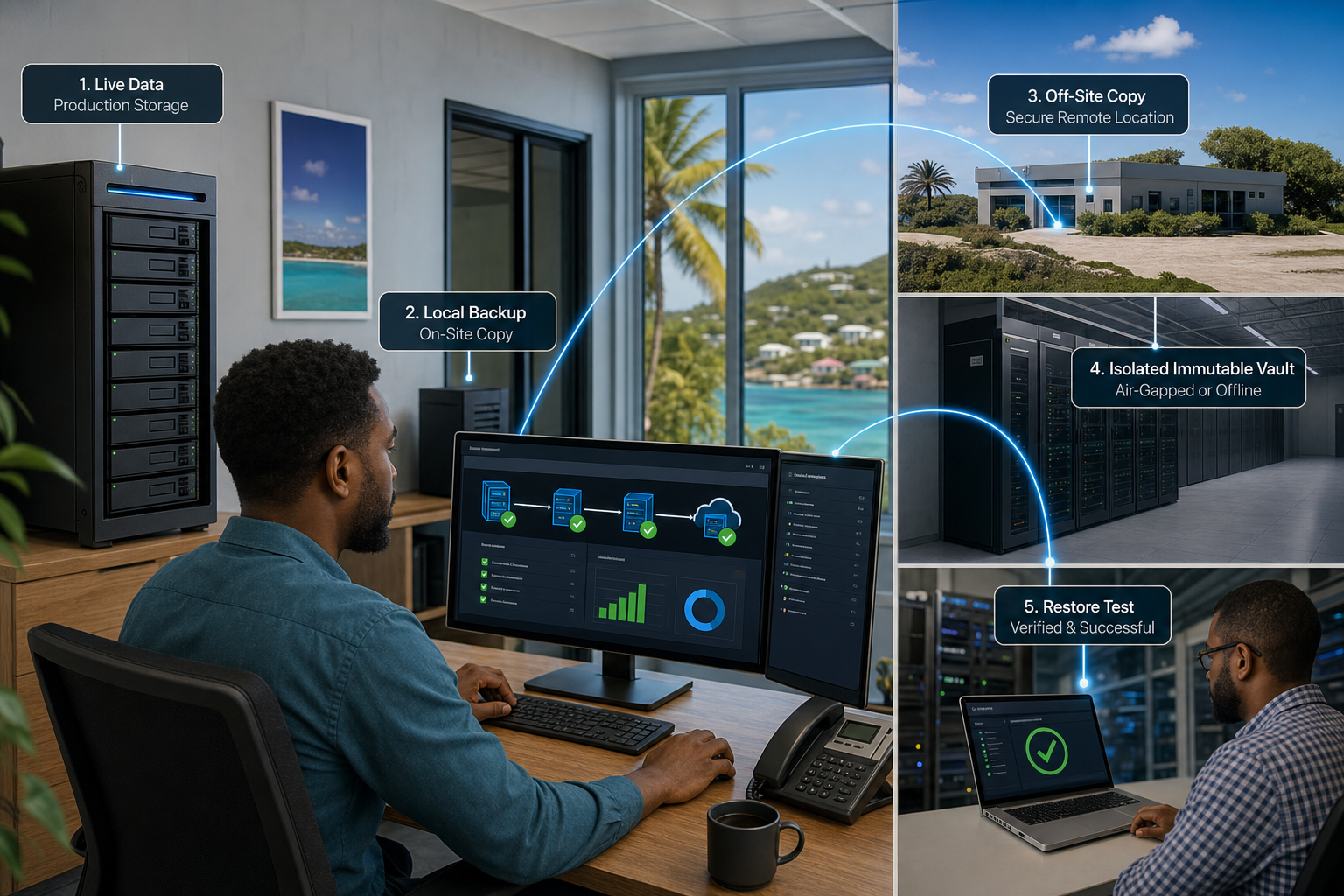
The first is regular disaster recovery testing. A backup that has never been restored is still an assumption. Quarterly or scheduled recovery validation gives management something more useful than a vague promise.
The second is long-term retention. Some records need to be kept because of audits, disputes, finance requirements, HR needs, or industry rules. Retention should be planned, costed, and documented instead of left to whatever default setting came with the backup job.
The third is off-site backup. Local backups are useful for fast recovery, but they are not enough if ransomware, theft, fire, flooding, or equipment failure affects the same location. A proper design needs a second protected copy away from the original site.
Why Platform Cost Still Matters
Synology's point is also practical for MSPs: these features can become expensive if they require extra hypervisors, extra licensing, closed cloud storage, or manual work every time a client asks for proof.
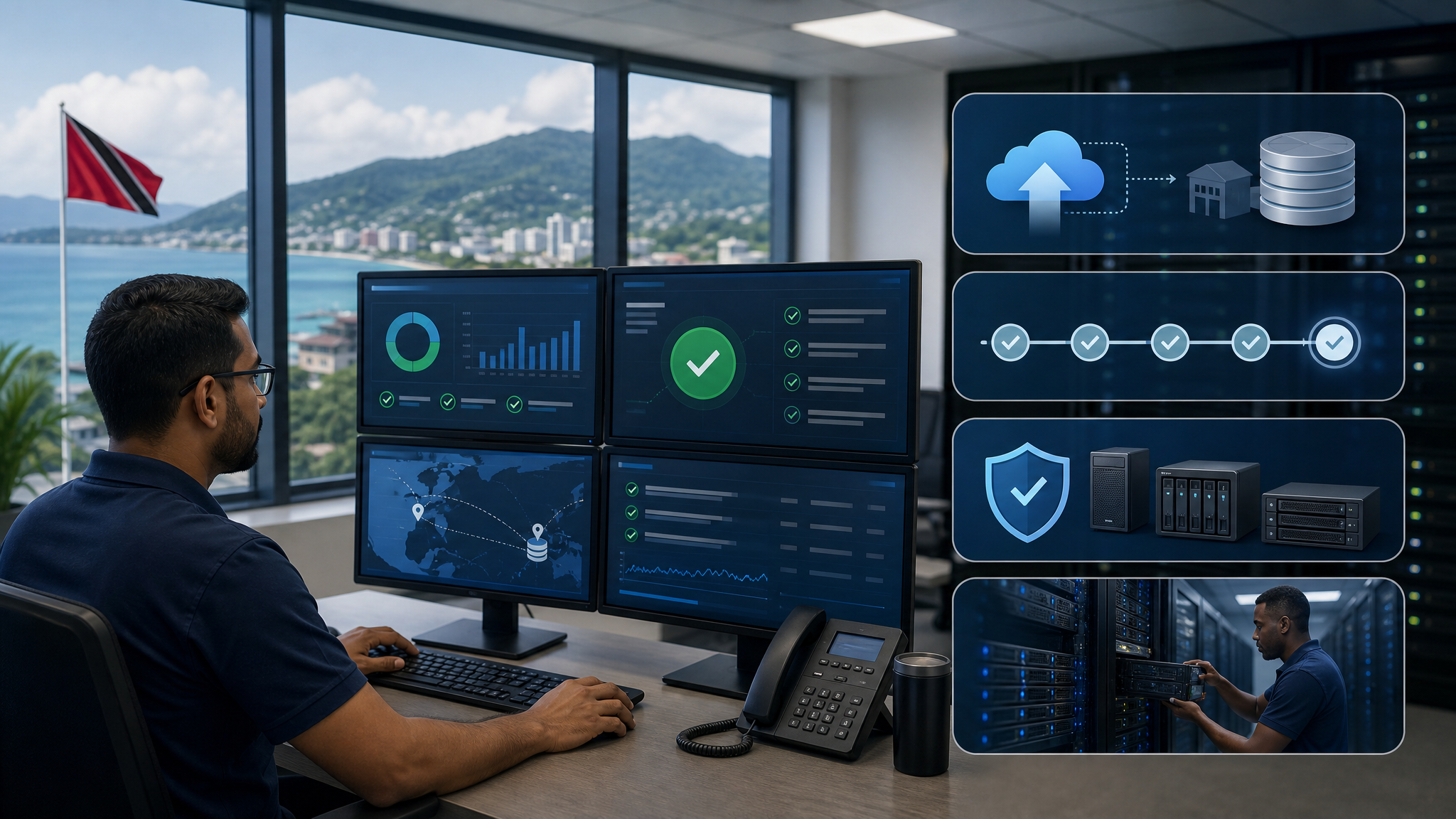
ActiveProtect is positioned around built-in recovery testing, centralised retention options, flexible off-site storage, global deduplication, and bandwidth controls. For a managed service provider, that matters because lower operational friction makes it easier to deliver better backup discipline without turning every restore test into a project.
The Blue Chip View
Clients should not have to decode backup tooling. They should know what is protected, how often it is tested, where the off-site copy lives, how long important data is retained, and who responds when a backup job fails.
Blue Chip Technologies helps businesses review existing backup gaps, design Synology NAS and ActiveProtect deployments, add off-site resilience, and test restores before an outage forces the issue.
If your backup service cannot prove recovery, it is time to tighten the plan.