

Keep Your CRM and Quotes in Sync Before the Deal Slips
Sales teams lose momentum when the CRM says one thing and the proposal folder says another.
For many Trinidad and Tobago SMBs, the quote starts in one place, the customer record lives somewhere else, pricing is checked by email, and the final PDF gets saved wherever the salesperson had time to put it. That works when the business is small. It becomes a problem as soon as more people need visibility into the same opportunity.
QuoteWerks' article on its Pipedrive integration is useful because it points to a practical fix: connect the quoting process to the CRM record instead of asking staff to copy information back and forth.
Why this matters for local sales teams
A CRM should show what is actually happening in the pipeline. If a proposal was sent, revised, accepted, or delayed, management needs to see that without chasing the salesperson.
When quoting is disconnected from the CRM, businesses usually run into familiar problems:
- contact details get typed twice and sometimes typed incorrectly
- quote values in the CRM do not match the real proposal
- managers forecast from stale deal amounts
- support or operations cannot find the latest scope
- customers receive inconsistent proposal documents
- accepted quotes do not trigger the next handoff quickly enough
Those are not just software problems. They affect cash flow, purchasing, customer confidence, and the sales team's credibility.
What the QuoteWerks and Pipedrive connection helps automate
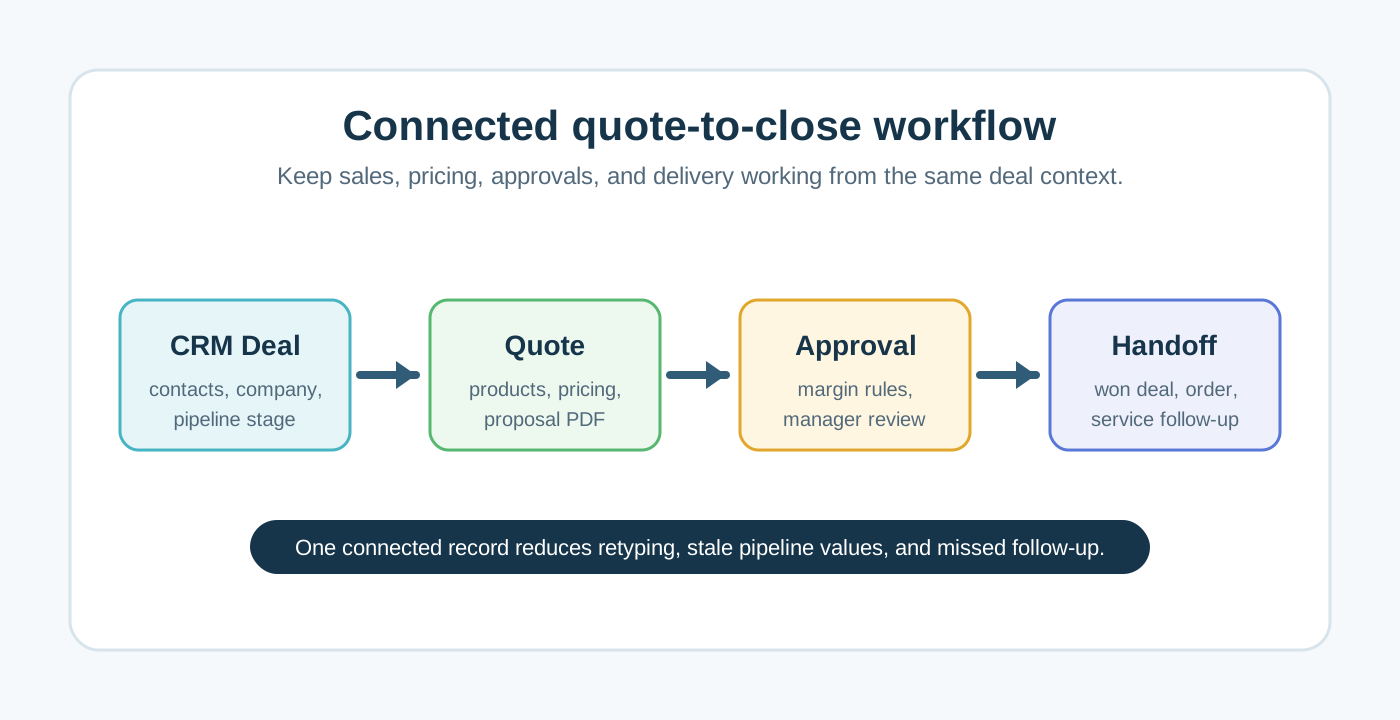
The QuoteWerks article highlights several integration points that are especially relevant for SMB sales teams using Pipedrive. QuoteWerks can pull Pipedrive contacts into a quote, create or update Pipedrive deals when quotes are saved, attach quote PDFs and related documents to deals, sync product and pricing information, and log quote activity back to Pipedrive.
In plain terms, the quote becomes part of the deal record.
That gives the salesperson less admin work and gives management a cleaner view of the pipeline. It also means the business has one place to look when a customer calls about a proposal, a price change, or the next step after acceptance.
Better quoting is not only faster quoting
Speed matters, but accuracy matters more.
For companies selling IT hardware, services, subscriptions, projects, maintenance contracts, or bundled solutions, a quote may involve supplier costs, margins, optional items, taxes, delivery assumptions, and approval rules. If the CRM and quote system are not aligned, the business can move quickly and still make poor decisions.
A connected workflow helps the team answer practical questions:
- Is this deal value based on the latest quote?
- Which proposal version was sent to the customer?
- Has the quote been attached to the opportunity?
- Did the accepted proposal include the correct products and services?
- Does operations have enough detail to deliver what sales promised?
- Are sales forecasts based on real proposal activity or manual guesses?
That is where quote-to-cash improvement starts: better control before the customer says yes.
Where Blue Chip focuses during implementation
Blue Chip looks at the workflow before switching on the integration.
The important details are field mapping, product naming, pricing rules, user permissions, approval steps, proposal templates, document storage, and the handoff from sales to accounts or operations. If those areas are not planned, the integration may move bad data faster instead of improving the process.
For a Pipedrive and QuoteWerks rollout, we would normally review:
- how leads and deals are structured in Pipedrive
- which fields should flow into quotes
- how products, services, taxes, and recurring items are named
- where quote PDFs and supporting documents should be stored
- which quote events should update deal stages or activities
- who can discount, approve, revise, or accept a quote
- what should happen after a quote is accepted
The goal is a quoting system that feels natural to sales while giving managers the control they need.
A good first step
Start with one common sales workflow. Pick a quote type that happens often, such as a hardware refresh, service renewal, project proposal, or monthly support package. Map the current process from CRM deal to quote, approval, customer acceptance, purchasing, invoicing, and delivery.
Then decide which steps should be automated and which steps still need human review.
That keeps the project practical. Instead of trying to automate every exception on day one, the business builds a reliable quoting foundation and improves it over time.
For SMBs already using Pipedrive, QuoteWerks can help make the CRM more than a sales diary. It can become the control point for accurate proposals, cleaner handoffs, and better quote-to-cash visibility.
Source: QuoteWerks - Streamline Your Sales Process with the QuoteWerks Pipedrive Integration.