
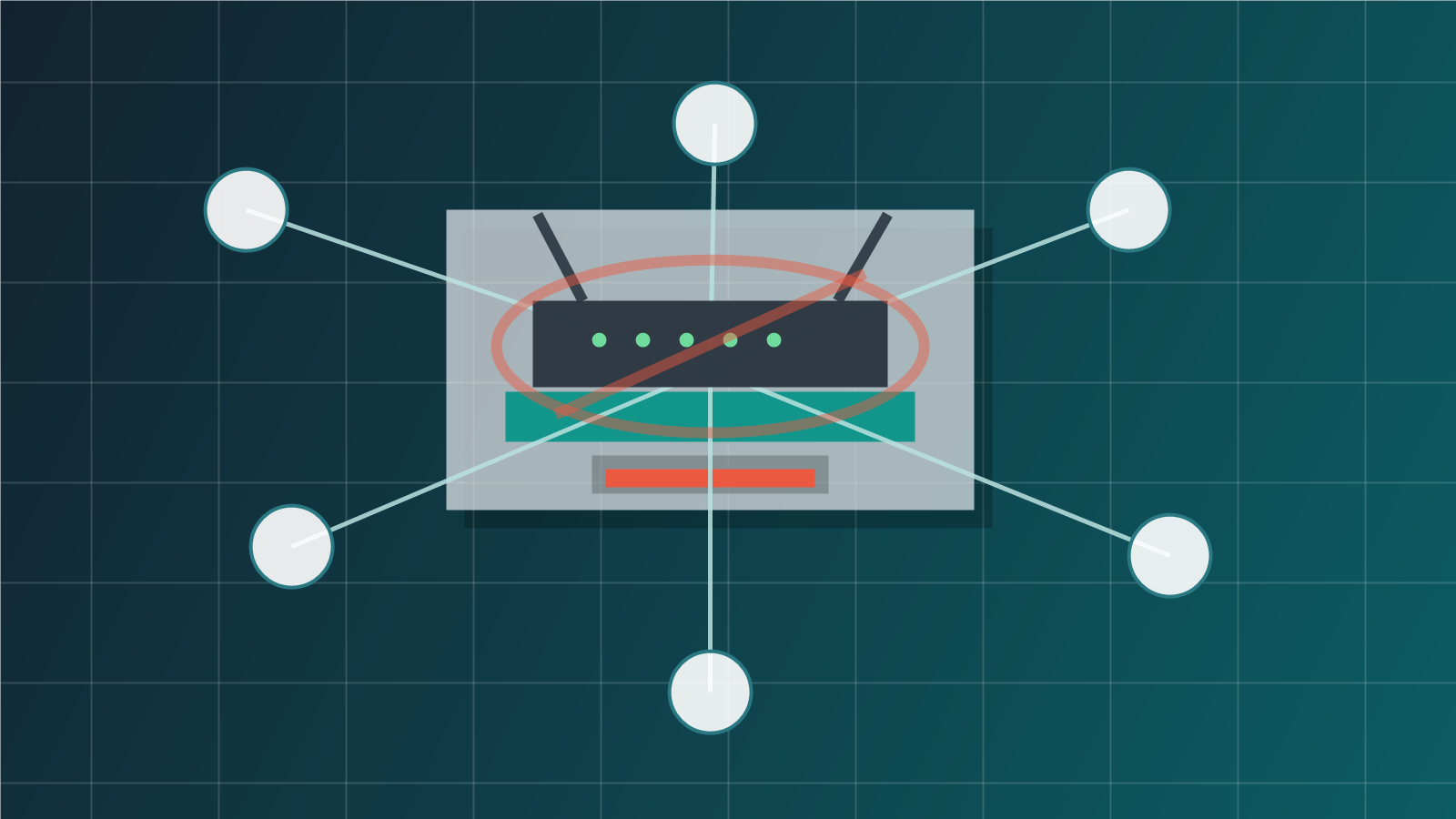
Old Routers Are Becoming Attack Infrastructure
Old routers and forgotten network devices rarely get attention until something breaks. AryStinger is a useful reminder that unsupported hardware can become a security problem long before staff notice anything wrong.
Security researchers at QiAnXin XLab reported AryStinger on 17 June 2026, and BleepingComputer covered the campaign on 21 June 2026. The malware has compromised more than 4,000 outdated routers worldwide, mainly legacy D-Link DIR-850L and DIR-818LW devices, with a smaller but more capable variant aimed at NAS systems.
The uncomfortable part is that the campaign is not relying on brand-new tricks. It abuses old vulnerabilities, including CVE-2013-3307, CVE-2016-5681, and CVE-2025-11837. In plain English: devices that should have been replaced, updated, or removed from service are still online, and attackers are turning them into useful infrastructure.
Why this matters to businesses
A compromised router is not just a problem for the next victim. It can also weaken the business that owns it.
AryStinger turns infected devices into attacker-controlled nodes that can scan, proxy traffic, create tunnels, run commands, and support reconnaissance. XLab describes each infected device as an executor that can be given work by the command server. That means an old router can become part of someone else's attack chain while still sitting quietly in a small office, branch location, warehouse, or home office.
For business owners, the important lesson is not the malware name. The lesson is that network edge devices need lifecycle management. Routers, firewalls, access points, NAS units, switches, and VPN appliances are not appliances you install once and forget for ten years. If they are unsupported, internet-exposed, poorly documented, or managed with default settings, they become weak points around every other investment in security.
That matters in Trinidad and Tobago because many small and mid-sized businesses grow their networks gradually. A router is added for a second office. A NAS is installed for shared files. A wireless device is left behind after an upgrade. A backup internet link gets its own equipment. Years later, nobody is fully sure which device is current, which one is still supported, and which one is quietly exposed to the internet.
What AryStinger can do
The reported campaign focuses heavily on reconnaissance and proxying. That is still serious. Attackers value compromised routers because they let them hide their true location, scan targets from many places, and blend malicious traffic into normal residential or business internet connections.
The NAS-focused variant is more advanced. Reporting notes capabilities such as internal network scanning, DNS scanning, command execution, payload execution, and tunnelling. That is exactly the kind of activity a business does not want happening from a trusted internal device.
There is also a privacy angle. BleepingComputer noted that AryStinger can tamper with DNS settings, hijack browsing, and potentially monitor inbound and outbound traffic. For a business, DNS tampering can lead users to fake login pages, interfere with cloud applications, or create strange issues that look like ordinary internet problems until someone investigates properly.
What to check now
Start with the basics: identify any D-Link DIR-850L, DIR-818LW, DIR-816L, DIR-818L, DWR-118, DIR-817LW, older Linksys routers, and NAS devices still in use. Do not stop at the main office. Check branch sites, storerooms, home-office kits, temporary locations, and retired equipment that may still be plugged in.
If a router or NAS is end-of-life, plan to replace it. A final firmware download is not the same as active security support. Once the vendor no longer provides updates, the device becomes harder to defend every month it remains online.
For supported devices, install current firmware, change default administrator passwords, disable remote administration unless there is a controlled business need, and restrict management access. Review DNS settings and look for unexplained changes. For technical teams, XLab also recommends checking for suspicious communication with the campaign's infrastructure, files under /tmp/bin, and processes such as syswapd0h or syswapd0w.
The wider control is asset documentation. If you cannot quickly list the routers, firewalls, NAS devices, firmware versions, owners, support status, and remote access settings in your environment, the business is relying on memory. That is not a security process.
Where managed IT helps
Blue Chip Technologies' Managed IT Services are built around this kind of visibility work. The goal is not just to react when a headline appears. The goal is to know what is on the network, monitor it continuously, keep supported systems patched, and replace unsupported equipment before it becomes the easiest path in.
Our managed service model includes proactive 24/7 monitoring, enterprise RMM, automated patch management across Windows, macOS, Linux, and third-party applications, asset documentation, helpdesk and ticketing, and optional NOC coverage for organisations that need constant operational oversight.
On the security side, Bitdefender GravityZone endpoint security, ransomware prevention, EDR, phishing and web threat defence, vulnerability management, and Microsoft 365 or Google Workspace email security help reduce the chance that one weak device turns into a wider incident.
This is especially useful for businesses that want predictable monthly IT costs instead of surprise emergency work. Unsupported devices, missed patches, stale documentation, and unmanaged remote access all create avoidable risk. A managed process brings those issues into view before attackers do.
Bottom line
If your business still has old routers or NAS devices in service, treat them as part of your security posture. Replace unsupported hardware, update what is still supported, disable unnecessary remote access, document what you own, and make network-edge review part of routine IT maintenance.
AryStinger is not a reason to panic. It is a reason to stop assuming that quiet hardware is safe hardware.
Sources
- QiAnXin XLab: More Than 4,000 Legacy Routers Compromised by AryStinger
- BleepingComputer: AryStinger botnet infected thousands of D-Link routers worldwide