

Online Quotes Should Help Customers Say Yes Faster
Sending a quote is not the finish line. For many small and medium-sized businesses, it is the point where the real buying decision begins.
A customer may need to compare options, confirm quantities, check delivery details, ask a question, upload a purchase order, get internal approval, sign, or pay. If that process depends on scattered emails and manually revised PDFs, the quote can slow down even when the customer is ready to move.
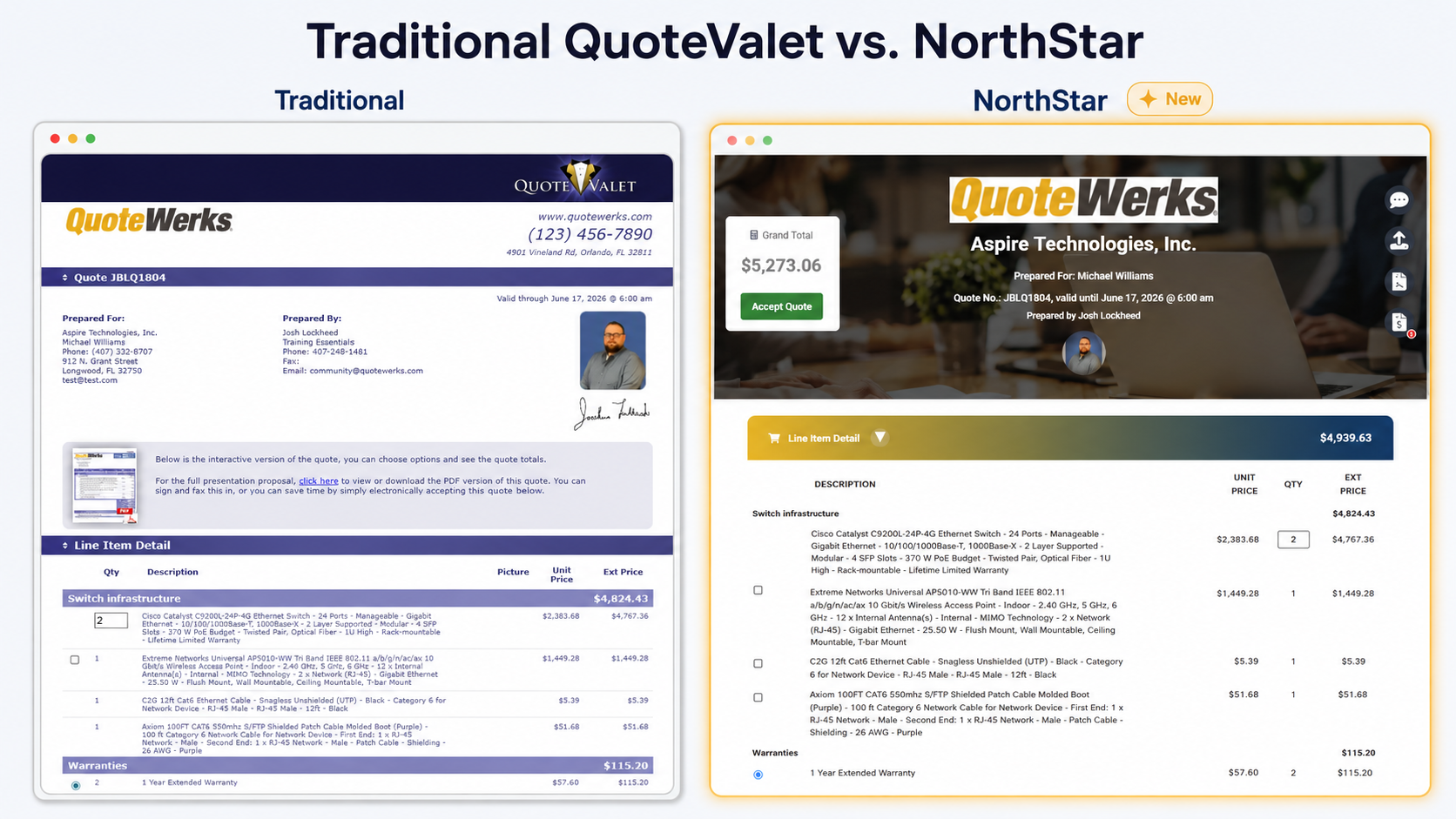
QuoteWerks recently introduced QuoteValet NorthStar Templates, a newer customer-facing quote experience for QuoteValet. The important lesson for Trinidad and Tobago businesses is not just that the page looks more modern. It is that the quote can become an interactive buying workspace instead of a static document.
The customer experience matters after the quote is sent
Many sales teams spend time improving the proposal before it leaves the office, then lose control of the process once the customer opens it. The customer has questions. A quantity changes. The delivery address needs correcting. A manager wants to see the terms. Someone needs a signed copy. The finance team asks whether payment can be made online.
Each small step can create another delay.
An online quoting workflow helps by keeping those actions close to the quote itself. The customer can review the offer, interact with selected items, ask questions, upload supporting documents, view terms, accept, sign, and move toward payment without starting a new thread for every detail.
For SMBs, that can mean fewer stalled quotes and cleaner handoff from sales to fulfilment.
Optional items should not become another revision cycle
Optional items are common in technology quotes. A business may quote a base laptop with warranty options, a phone system with additional handsets, a firewall with support services, or a software subscription with add-on modules.
If the customer wants to adjust quantities or select optional items, the old workflow often becomes a loop: customer email, salesperson edit, new PDF, customer review, another question, another revision.
Interactive quote pages reduce that friction. They make it easier for the buyer to understand the recommended package and make practical choices without turning every small change into a fresh proposal document.
That does not replace sales advice. It makes the advice easier to act on.
Delivery and order details need to be captured early
Delivery information is one of those quiet details that can cause avoidable problems. The quote may be approved, but the delivery address may be wrong, the branch location may have changed, or the customer may need to attach a purchase order before the order can proceed.
When the quote process captures those details before acceptance, the fulfilment team starts with cleaner information. That matters for businesses selling equipment, software licences, managed services, installations, renewals, and project work.
It also helps prevent the familiar problem where a quote is technically accepted, but the order still sits waiting because the team needs one more document or one more clarification.
Terms, signatures, and payments should be part of the same journey
Customers should not have to search through separate attachments to understand the terms of purchase. Sales teams should not have to chase signatures manually when electronic acceptance is available. Finance teams should not have to rebuild payment instructions after the quote has already been approved.
A better quote-to-cash workflow connects these pieces:
- clear line items and optional choices
- visible terms and conditions
- customer questions tied to the quote
- document upload where required
- purchase order entry
- signature capture
- payment options where appropriate
- signed-copy download and order confirmation
The business benefit is simple: fewer handoffs, fewer missing details, and a cleaner record of what the customer accepted.
This still needs a managed process
A modern quote page will not fix a messy sales process by itself. Before enabling a new quoting experience, businesses should check the basics:
- Are quote templates consistent and branded correctly?
- Are optional items named clearly enough for customers to understand?
- Are terms and conditions current?
- Are taxes, shipping, discounts, and payment terms handled correctly?
- Who receives quote questions and uploaded documents?
- What happens after acceptance?
- Does the CRM or accounting workflow receive the right information?
- Are approvals required before certain discounts or product combinations are sent?
The technology is useful only when the process around it is clear.
Blue Chip's view
For local SMBs, quoting is often where sales, procurement, accounts, management approval, and customer service all meet. If that workflow is handled manually, delays become normal. If it is designed properly, the business can respond faster and with fewer mistakes.
Blue Chip Technologies helps businesses think through the full quote-to-cash path: quote templates, customer-facing proposal workflows, CRM integration, approval rules, product and service bundles, procurement handoff, payment flow, reporting, and support.
QuoteWerks and QuoteValet are useful in that conversation because they are not just about producing a nicer-looking quote. They can help turn the quote into a controlled business process.
The goal is not to pressure customers. The goal is to make it easier for a ready customer to understand the offer, choose the right options, approve the order, and move forward without unnecessary back-and-forth.
Source: QuoteWerks Blog - Introducing QuoteValet NorthStar Templates: A Modern, Interactive Quote Experience for Your Customers.