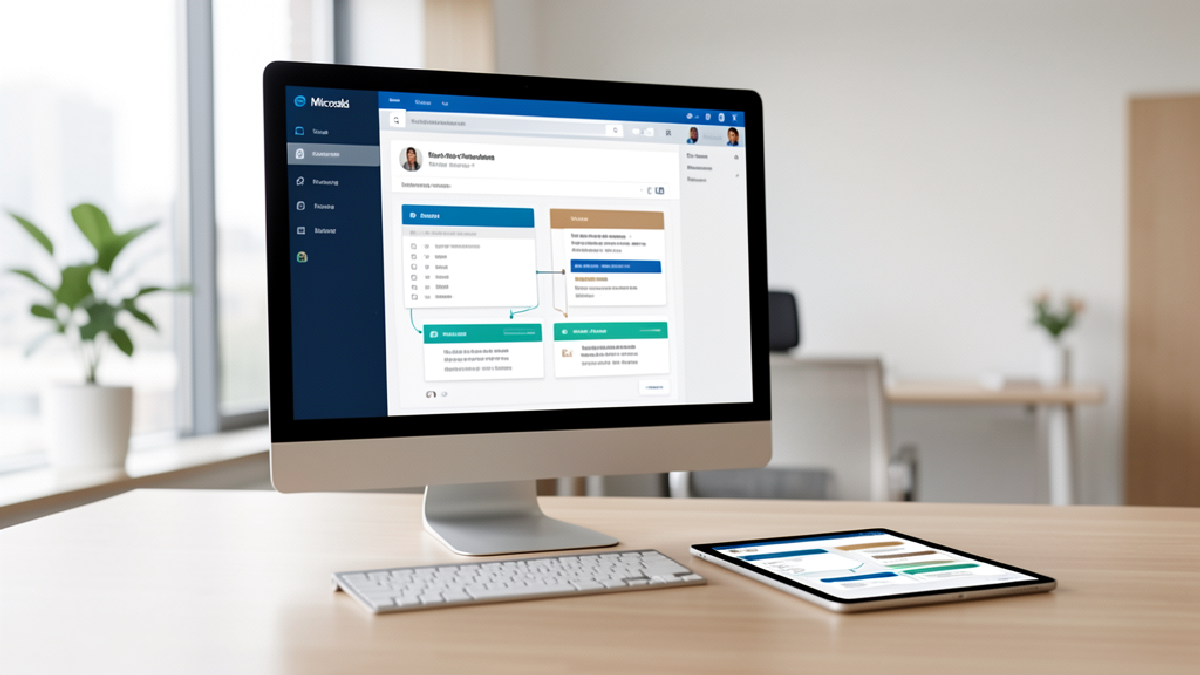

Synology recently marked ten years of its productivity tools in a post about Synology Office and Drive. The useful lesson for Trinidad and Tobago businesses is not nostalgia. It is that file collaboration, document access, search, and internal sharing do not always have to live entirely inside a public cloud subscription.
The Business Problem
Many small and mid-sized businesses end up with a messy mix of shared folders, email attachments, WhatsApp documents, personal cloud drives, and Microsoft or Google licences. That works for a while, then it becomes hard to control. Files are duplicated, staff cannot find the current version, and management has no simple answer to where sensitive information is stored.
Synology Office and Drive offer a different pattern: keep collaboration close to the business data, on infrastructure the organisation controls, while still giving staff browser-based access to documents, spreadsheets, slides, shared folders, and search.
Where Synology Fits
Synology says Office started as Spreadsheet in 2015 and later grew into documents and slides. More importantly for business owners, Synology positions Office and Drive as privately hosted tools. Your company decides where the data sits, how it is backed up, who can access it, and how it is recovered if something goes wrong.
The licensing angle also matters. Synology says Drive and Office are available for as many users as needed on Synology storage. For organisations with staff who only need occasional access to documents, manuals, rosters, forms, or internal announcements, that can reduce the pressure to buy a full productivity licence for every single person.
Privacy and AI
Synology also points to optional AI features, OCR, and speech-to-text capabilities that can be handled with more control than a typical public SaaS workflow. For businesses handling HR documents, client files, finance records, or confidential projects, the question should not be, "Can AI read this?" The better question is, "Where does the data go, who controls it, and can we prove that?"
How Blue Chip Technologies Helps
Blue Chip Technologies can help decide whether a Synology-based collaboration setup makes sense beside Microsoft 365 or Google Workspace, rather than pretending one tool should replace everything. The right design may use Microsoft or Google for email and meetings, Synology Drive for local file control, and a proper backup plan across both environments.
For a local SMB, the practical next step is a file workflow review: where documents live now, which staff need access, what must be private, what must be backed up, and what would happen if the Internet, a laptop, or a cloud account failed. From there, Blue Chip Technologies can design a Synology Office and Drive deployment that fits the business instead of adding another tool for its own sake.