Spam Filtering Needs Management, Not Just a Junk Folder
Spam is no longer just an annoyance that fills a junk folder. For small and medium-sized businesses, unwanted email is tied to phishing, malware delivery, invoice fraud, credential theft, productivity loss, and data-protection risk.
GFI Software's webinar article, Fighting Spam with GFI Software, makes the practical point that businesses cannot afford to sit on the sidelines when spam is costing organisations time, money, and security exposure. The message is still relevant for Trinidad and Tobago SMBs: email protection needs to be managed as part of the IT environment, not treated as a user-by-user cleanup exercise.
A Junk Folder Is Not a Security Strategy
Many businesses assume their email platform is handling spam well enough because obvious junk messages disappear into a folder. That is only part of the job.
A proper email security process should help answer operational questions:
- Are phishing messages being blocked before users see them?
- Are malicious attachments and links being inspected?
- Are impersonation attempts being detected?
- Are quarantine releases reviewed carefully?
- Are false positives handled without training users to bypass controls?
- Are domain, SPF, DKIM, and DMARC records configured correctly?
- Are users reporting suspicious messages quickly?
- Are repeated attacks being turned into better rules and training?
If nobody owns those questions, the business is relying on luck.
Spam Creates Real Business Cost
The visible cost is time. Staff stop what they are doing, scan cluttered inboxes, delete junk, and decide whether a message is safe. Even a few minutes a day across a team becomes a real productivity drain.
The larger cost is risk. One convincing fake invoice, supplier payment change, password reset notice, courier message, or Microsoft 365 login prompt can lead to account compromise or payment fraud. Attackers do not need every message to work. They only need one person to click at the wrong time.
That is why spam filtering should be connected to security monitoring, user support, and management reporting.
Where GFI MailEssentials Fits
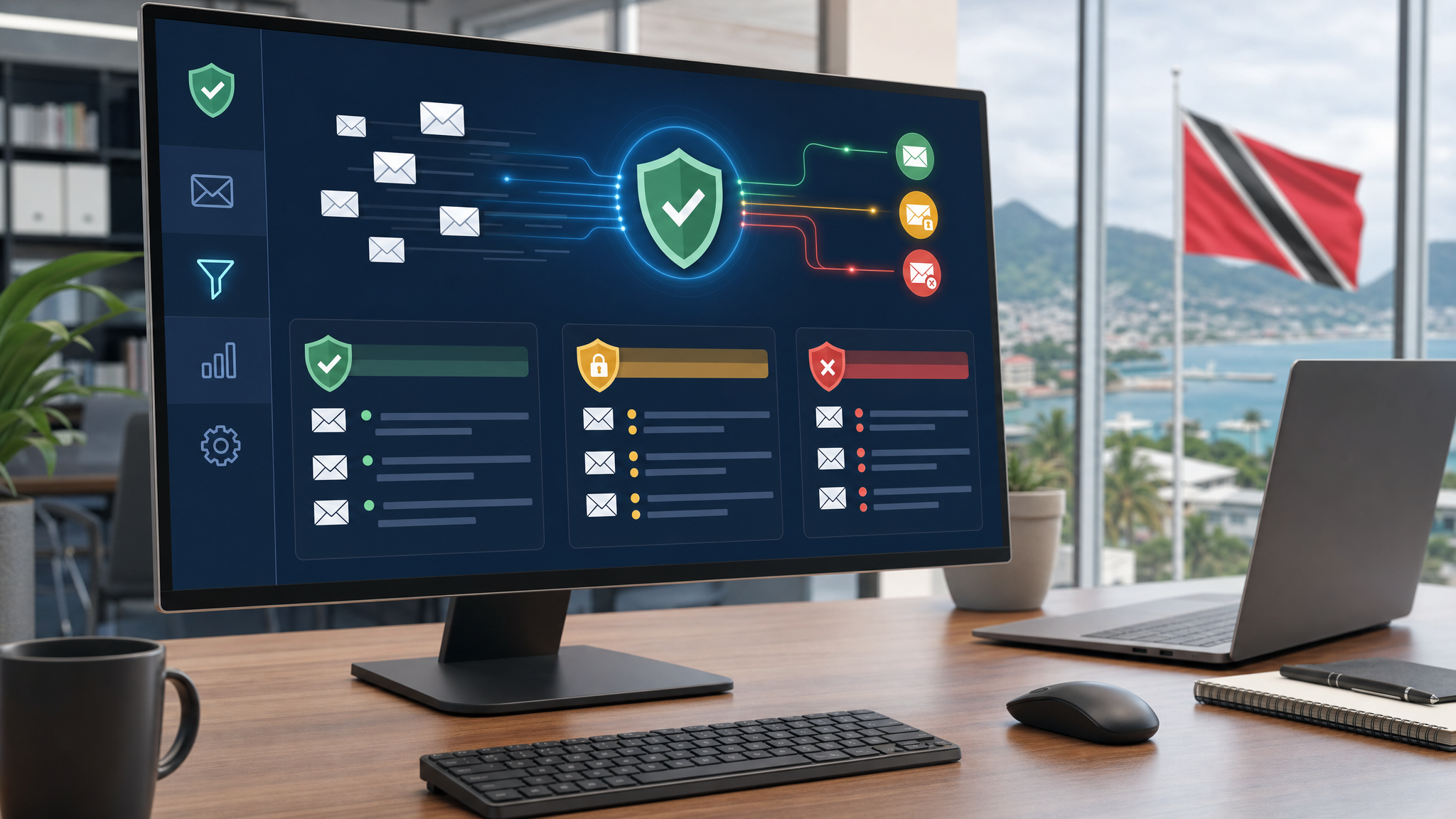
GFI MailEssentials is designed for business email security, including anti-spam, anti-phishing, anti-malware, content filtering, and email threat protection. For organisations using on-premises or hosted mail systems, it can help create a more controlled layer between the internet and the user's inbox.
The business value is not just blocking more messages. The value is making email filtering manageable:
- central policies instead of individual inbox rules
- quarantine handling with review
- protection against malware and risky attachments
- filtering that can be tuned for the business
- visibility into recurring spam and phishing patterns
- a clearer support path when users report suspicious email
For a managed IT provider, those controls become part of the wider support process instead of an isolated mail setting.
Email Protection Should Be Managed
Blue Chip would normally treat spam filtering as one part of a broader email security setup. That includes:
- Microsoft 365, Google Workspace, or KerioConnect configuration review
- domain authentication checks for SPF, DKIM, and DMARC
- mailbox forwarding and suspicious inbox rule audits
- user MFA enforcement
- anti-phishing and anti-malware filtering
- endpoint protection for downloaded attachments
- helpdesk workflows for reported emails
- staff guidance for payment-change and impersonation attempts
- backup and recovery planning for email-dependent operations
The goal is not to make users afraid of email. The goal is to make the normal workflow safer and easier to support.
Quarantine Needs Process
Quarantine is helpful only when it is reviewed responsibly. If users are trained to release messages without context, the quarantine becomes another place where mistakes happen.
A better process separates routine false positives from risky requests. It gives staff a clear way to ask for help. It lets IT review message headers, links, attachments, sender reputation, and business context before allowing a questionable message through.
That process matters especially for finance, HR, management, and operations teams because they receive high-value requests: payments, payroll changes, contracts, vendor updates, customer records, and login prompts.
The Blue Chip View
Spam filtering is a managed service issue, not just an email feature.
Blue Chip can help businesses review their current email protection, tighten domain authentication, improve quarantine handling, tune filtering policies, train staff around real-world attack patterns, and connect suspicious-message reporting to helpdesk follow-up.
For clients using or considering GFI solutions, GFI MailEssentials can form part of a practical layered email security approach alongside endpoint protection, firewall controls, backup, MFA, and managed support.
If spam, phishing, fake invoices, or suspicious attachments are still reaching your staff too often, the next step is not just telling users to be more careful. The next step is to manage the email security layer properly.
Source: GFI Software - Fighting Spam with GFI Software.