Synology Active-Active Storage Still Needs a Recovery Plan
Synology announced the PAS7700 in May 2026 as its first active-active, all-flash NVMe storage system. It is aimed at mission-critical workloads and uses a dual-controller architecture with 48 NVMe SSD bays, scaling up to 1.65PB of raw capacity with expansion support.
That is serious storage.
It also does not remove the need for a recovery plan.
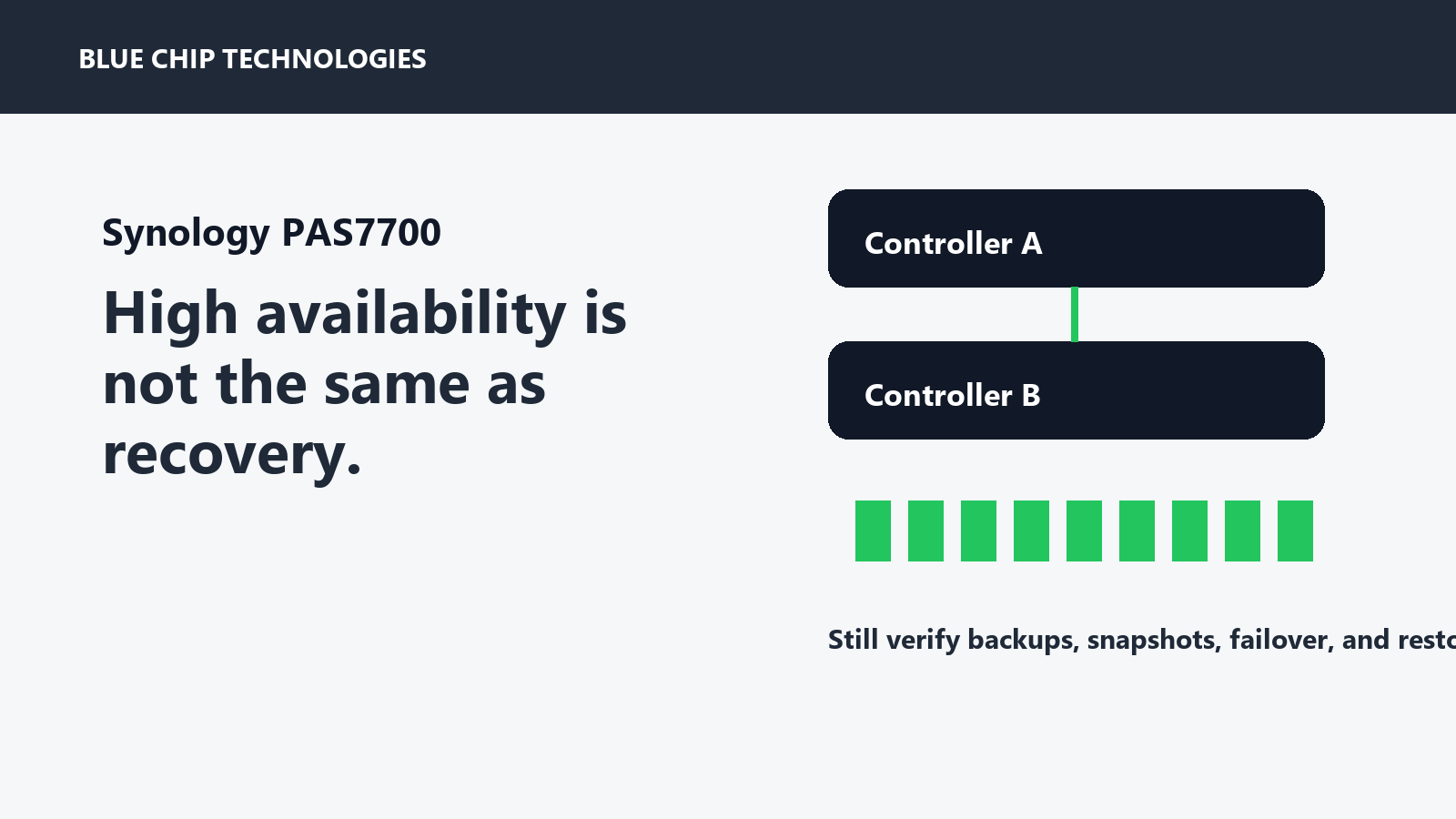
High availability solves one problem
Active-active storage is designed to keep services available when a component fails. That matters for virtualization, databases, file services, and other workloads where downtime quickly becomes visible.
But high availability is not the same thing as backup.
HA can help with hardware faults and controller failover. It does not automatically protect against:
- accidental deletion
- ransomware encryption
- bad application updates
- corrupted data
- insider mistakes
- replication of damaged files
- retention-policy gaps
- site-level disaster
The storage can be resilient and still faithfully preserve the wrong version of the data.
What businesses should pair with enterprise storage
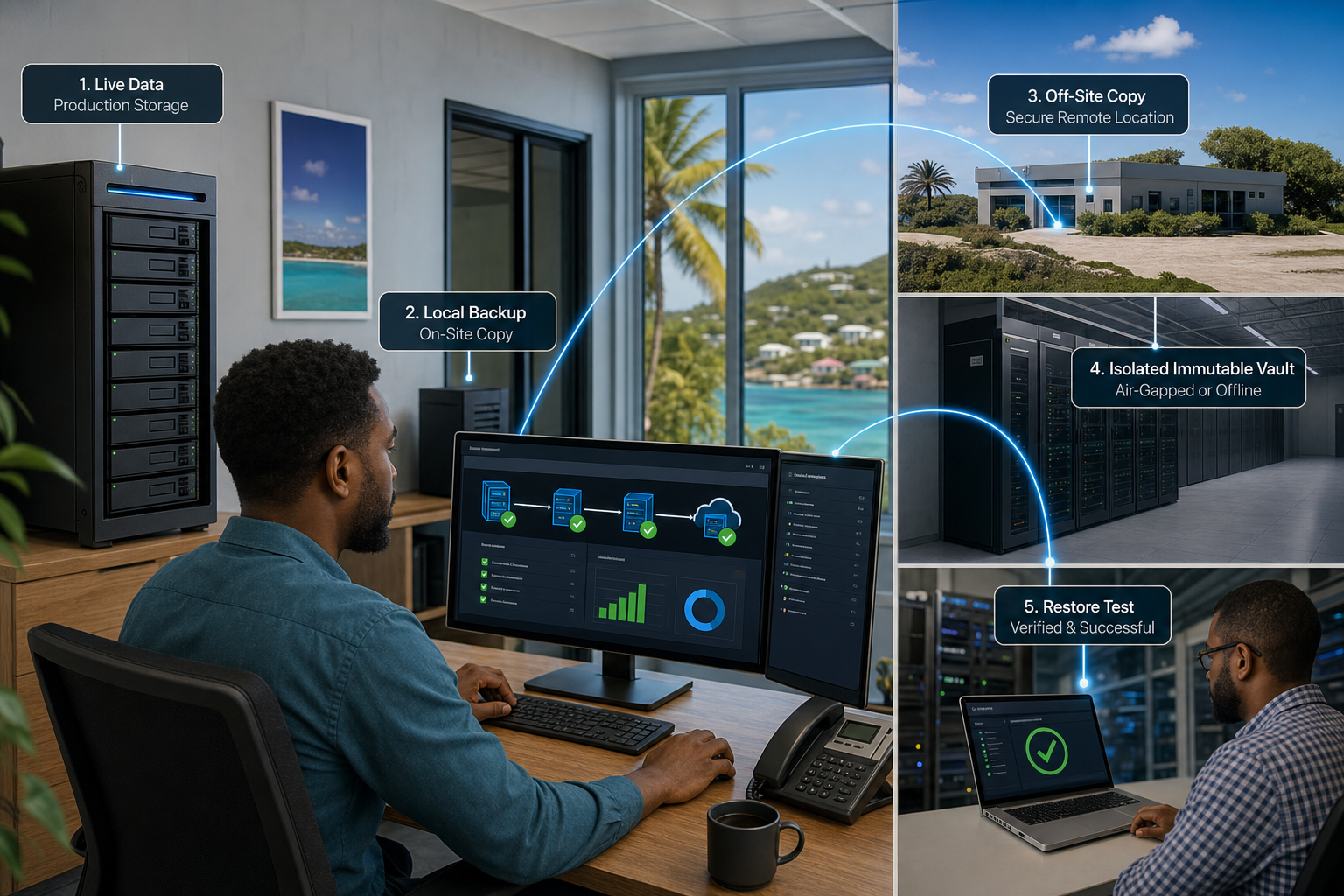
If a business is investing in high-performance storage, the recovery design should be just as deliberate:
- snapshots for fast local rollback
- immutable or locked backup copies where possible
- off-site backup or replication
- restore testing
- documented RPO and RTO targets
- monitoring for backup failures
- separation between production admin rights and backup admin rights
- a tested plan for ransomware recovery
The more important the storage, the more important the proof.
Ask the boring questions
Before putting critical workloads on any storage platform, ask:
- What happens if a file is deleted?
- What happens if ransomware encrypts a share?
- Can we restore one folder, one VM, or the full environment?
- How long will restore take?
- Who can delete backups?
- When did we last test a restore?
- Are alerts actually going somewhere someone reads?
These questions are not exciting, but they prevent a fancy storage purchase from becoming a false sense of safety.
The practical takeaway
Synology’s PAS7700 is a sign that Synology is pushing further into enterprise storage and mission-critical workloads. That is useful for businesses that need performance and availability.
Just do not confuse availability with recoverability.
Active-active storage helps keep workloads online. A recovery plan helps you survive the day the data itself is wrong, missing, encrypted, or damaged.
Source: Synology Newsroom - Synology launches PAS7700: active-active NVMe enterprise storage.