Reliable Audio and Video Networks Need More Than Speed
A fast network is important, but speed by itself does not guarantee a smooth audio or video experience.
That becomes obvious in spaces where timing matters: boardrooms, training rooms, conference areas, churches, hospitality venues, retail screens, schools, and any business using networked displays, speakers, cameras, or production equipment. If the network introduces timing differences, the result can be delayed audio, screens that are slightly out of sync, unstable playback, or AV systems that are difficult to troubleshoot.
Ubiquiti's recent article on UniFi Enterprise Audio Video Switching is useful because it highlights a point many businesses overlook: professional AV over IP needs predictable timing, not just high bandwidth.
Why Timing Matters for Business AV
Most office networks are designed around normal data traffic: email, cloud apps, file access, VoIP, printing, and Wi-Fi. Those workloads can usually tolerate small delays or brief bursts of congestion.
Audio and video are different. When screens, speakers, encoders, and AV endpoints have to work together in real time, even small timing differences can become visible or audible.
That is why proper AV networking focuses on latency, multicast behavior, synchronization, switching design, and monitoring. A network can look fine for general internet use and still perform poorly for a video wall, multi-room audio system, or larger presentation environment.
What UniFi EAV Switching Adds
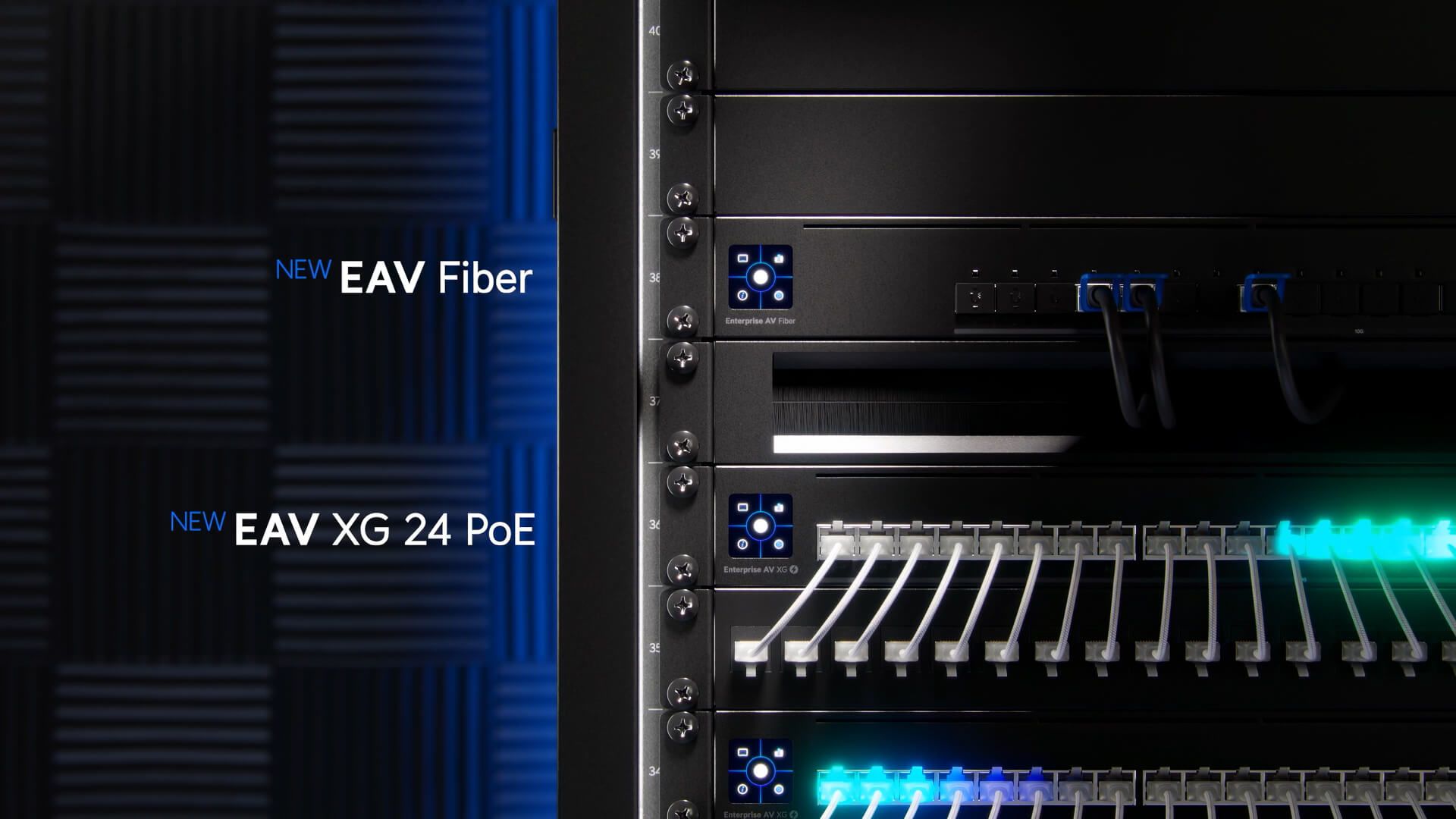
UniFi EAV Switching is designed for audio and video traffic that needs precise synchronization across the network. Ubiquiti describes support for Precision Time Protocol, deterministic timing, and AV standards such as Dante, AES67, SDVoE, and SMPTE ST 2110.
In practical business terms, that means the network is better prepared for AV systems where multiple endpoints need to stay aligned.
For local businesses, that can apply to:
- Boardrooms and meeting rooms
- Digital signage and display networks
- Training and classroom spaces
- Retail and hospitality AV
- Churches and event venues
- Video walls and larger presentation systems
- Facilities with multiple AV endpoints across rooms or buildings
The goal is not just to move traffic quickly. The goal is to move time-sensitive traffic consistently.
Visibility Makes Support Easier
One of the strongest benefits of bringing AV into a managed UniFi environment is visibility.

When AV equipment sits outside the managed network, troubleshooting can become guesswork. The IT team may know that users are complaining about delays or dropouts, but not where the timing issue is happening.
UniFi Network 10.3, as described by Ubiquiti, adds tools to help operators visualize latency, review historical port behavior, and understand AV network performance more clearly. That matters because businesses need problems solved quickly, especially when the affected room is used for meetings, customers, events, or training.
Better Planning for New Spaces
For many small and mid-sized businesses, AV systems grow gradually. A single display becomes a meeting room. A meeting room becomes multiple rooms. A training space adds microphones, speakers, cameras, and streaming equipment. A retail business adds screens across locations.
Without planning, each upgrade can add complexity.
A managed AV-ready network helps by giving the business a cleaner foundation: proper switching, proper uplinks, clear segmentation, suitable PoE planning, and better monitoring. That makes future upgrades easier to support instead of creating a collection of one-off fixes.
Where Blue Chip Fits In
Blue Chip Technologies helps businesses design networks that are practical to operate after installation, not just impressive on day one.
For UniFi environments, that includes firewall design, switching, VLANs, Wi-Fi, monitoring, documentation, remote support, and now AV-aware network planning where the use case requires it.
If your business is planning a conference room, training facility, digital signage rollout, hospitality AV setup, or a more complex multi-room system, the network should be part of the design from the beginning. Choosing the right switches and management model early can prevent reliability problems later.
Source: Ubiquiti — Introducing EAV Switching, published 15 April 2026.