
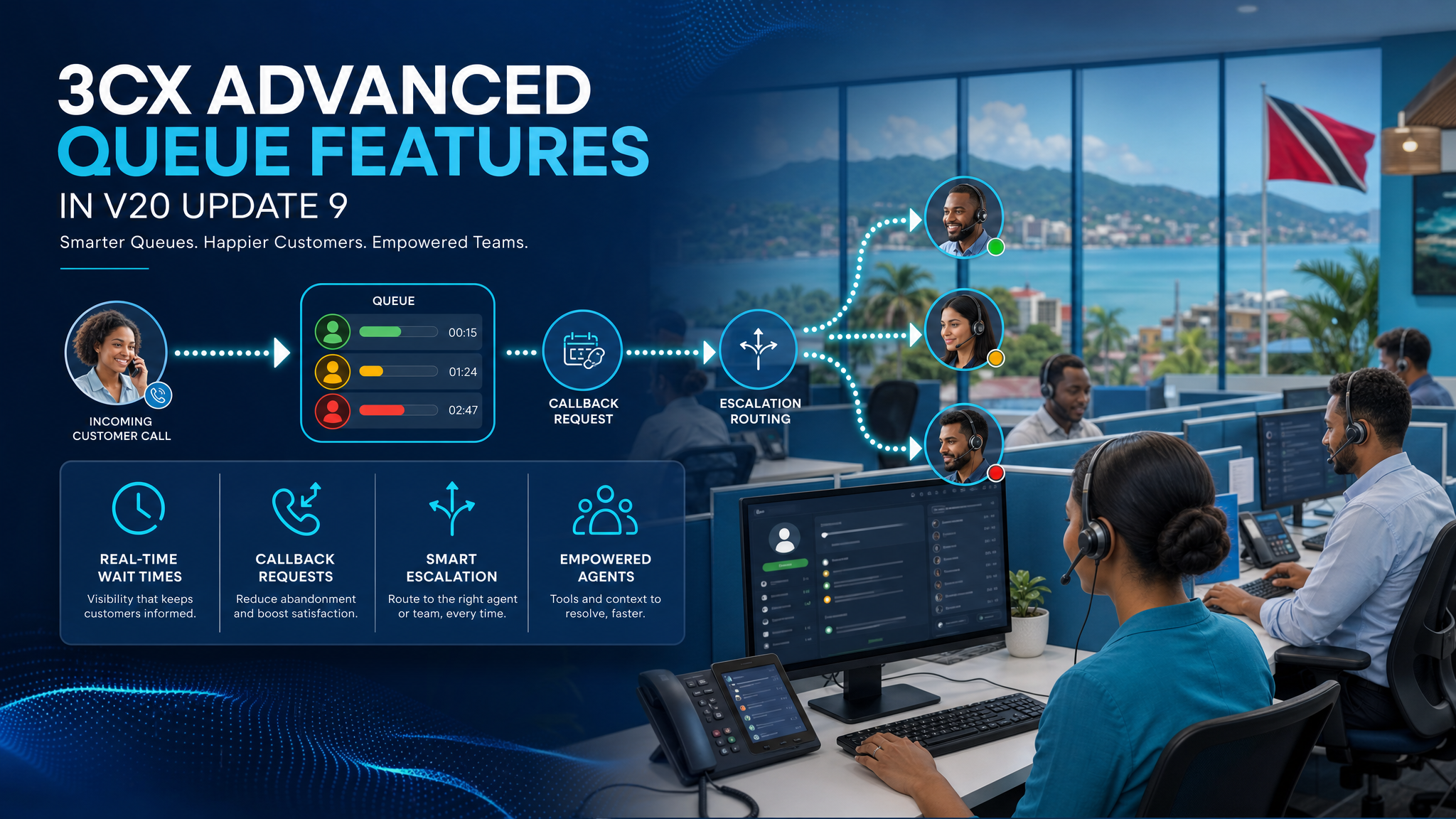
3CX Advanced Queue Features: Better Caller Experience Under Pressure
3CX has announced new advanced queue features in V20 Update 9, giving administrators more control over caller wait times, callback choices, escalation paths, and queue announcements.
For a business, this is not just a technical phone-system update. It is about what happens when customers call during the busiest part of the day: lunch hour, month end, Monday morning, service disruptions, delivery delays, or a campaign that suddenly drives more calls than usual.
When queues are planned well, callers get clearer expectations, staff handle pressure more fairly, and management has a better chance of protecting service levels instead of simply hoping someone answers quickly.
Why queues matter to customer experience
Many Trinidad and Tobago SMBs depend heavily on phone calls for sales, support, appointments, collections, service coordination, and escalation. The problem is that call volume rarely arrives evenly. A team may be quiet for 20 minutes, then receive five important calls at once.
Without good queue design, callers may hear the same hold music repeatedly, abandon the call, call another extension, or message a staff member directly. That creates confusion and makes the company look less organised than it really is.
A modern 3CX queue setup can help by routing calls based on priority, giving callers useful information while they wait, offering callback options, and escalating calls before they become service failures.
Callback on request
One useful addition is callback on request. Instead of forcing every caller into a callback flow, the system can offer the choice after a configured wait time. The caller can decide whether to keep waiting or request a return call.
That matters because not every caller has the same urgency. Some customers want to stay on the line; others would rather continue working and receive a call back. Giving the caller a choice can reduce frustration while keeping the business in control of the queue process.
For service desks, sales teams, clinics, distribution companies, and support departments, this can be a practical way to reduce abandoned calls without pretending every queue can be answered instantly.
Smarter escalation when calls wait too long
3CX also describes new escalation options for queues. Time-driven escalation allows a call to move to another skill group after a configured timeout, even if agents are technically available but not answering. Cumulative escalation can progressively add more groups so that a waiting caller reaches a wider pool of staff over time.
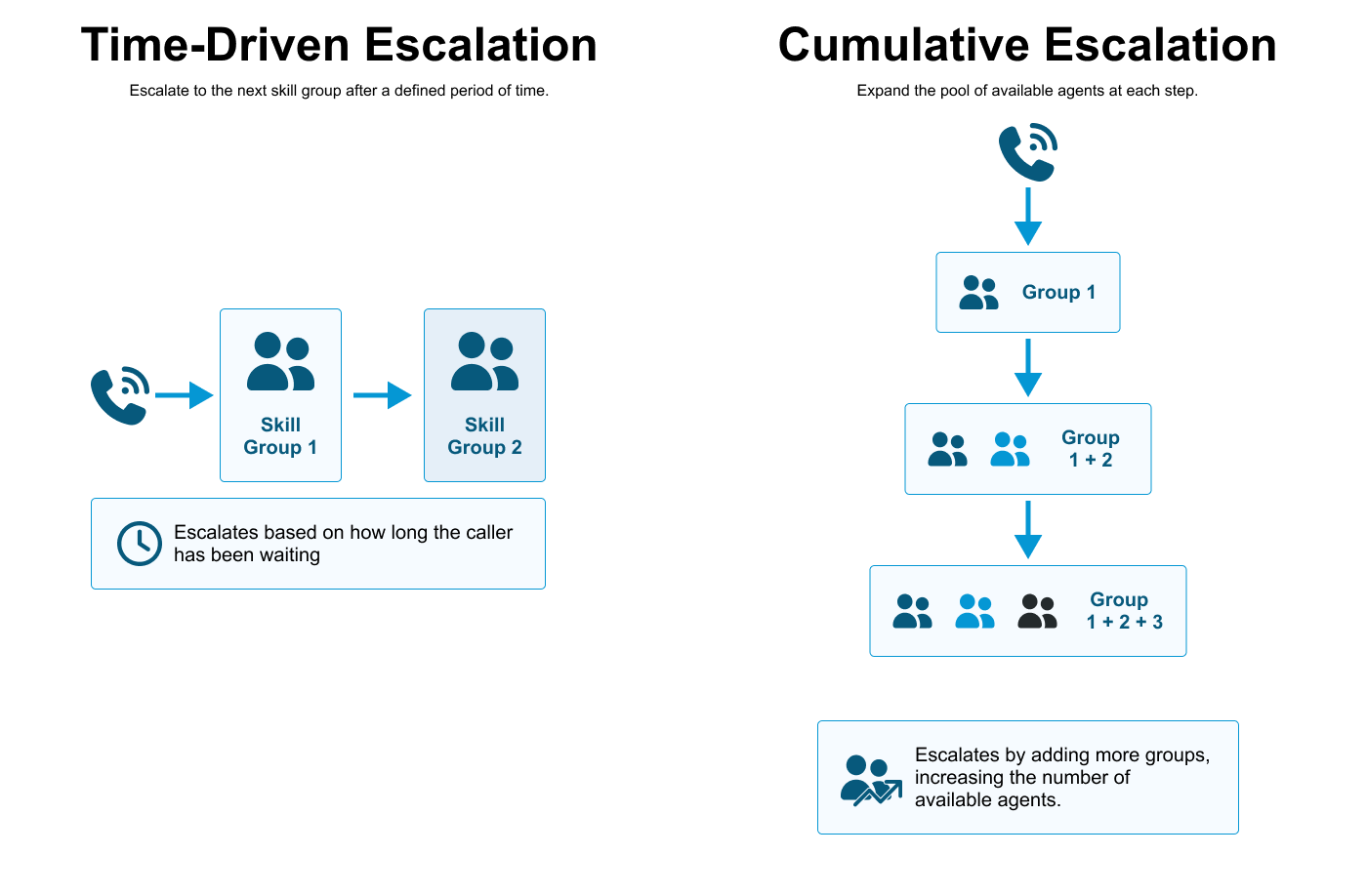
The business value is simple: the longer a customer waits, the more effort the system can make to get the call answered. That is especially useful when first-line agents are tied up, when a department is short-staffed, or when a call has waited long enough to justify involving a higher-skill or overflow group.
This should be planned carefully. Escalation should not create chaos by ringing everyone for every call. But used properly, it helps protect important queues and makes service levels more realistic.
Better prompts and estimated wait times
Update 9 also adds more prompt options, including comfort prompts, estimated wait time announcements, and a configurable no-answer prompt before sending the call to its fallback destination.
Comfort prompts can reassure callers or provide useful information while they wait. Estimated wait time can be more helpful than simply saying their queue position, because it sets a clearer expectation. A no-answer prompt can make the transition to voicemail, another team, or an after-hours destination feel more deliberate.
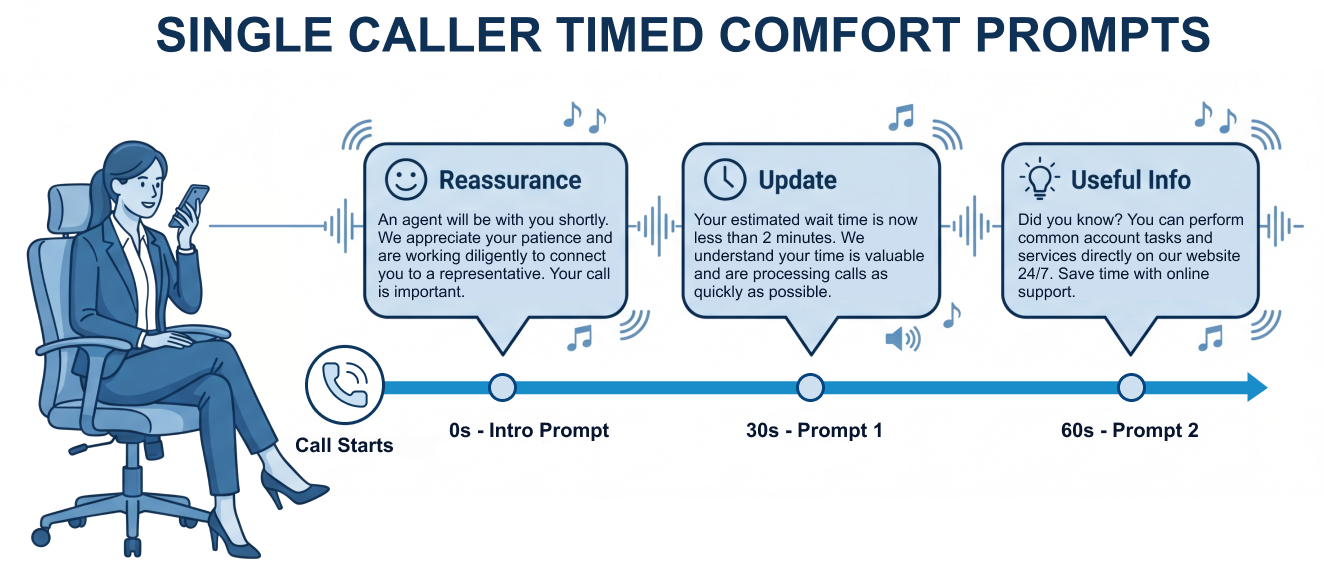
These small details matter. A caller who understands what is happening is less likely to hang up, redial repeatedly, or assume the business is ignoring them.
What businesses should review before enabling features
Advanced queue features work best when the phone system matches the way the business actually handles calls. Before making changes, review:
- Which numbers and departments receive the most calls
- Peak call times and abandoned-call patterns
- Which queues need callback options
- Which staff belong in first-line, overflow, and escalation groups
- How long callers should wait before escalation
- Whether estimated wait time will be useful for each queue
- What announcements should say in plain customer-friendly language
- How after-hours, lunch, holiday, and no-answer routing are handled
- Whether call reporting is being reviewed by management
The goal is not to add features because they exist. The goal is to reduce missed opportunities, improve customer confidence, and give staff a workflow they can manage.
How Blue Chip can help
Blue Chip Technologies helps businesses plan, deploy, and support 3CX phone systems, including queues, IVRs, SIP trunks, call recording, reporting, CRM integration, mobile apps, backups, security, and ongoing user support.
If your business depends on calls for revenue or customer service, 3CX V20 Update 9 is a good reason to review how your queues behave today. We can help assess call flow, queue configuration, escalation rules, announcements, and reporting so the phone system supports the customer experience instead of becoming a hidden bottleneck.
Source: 3CX — Advanced Queue Features in V20 Update 9.