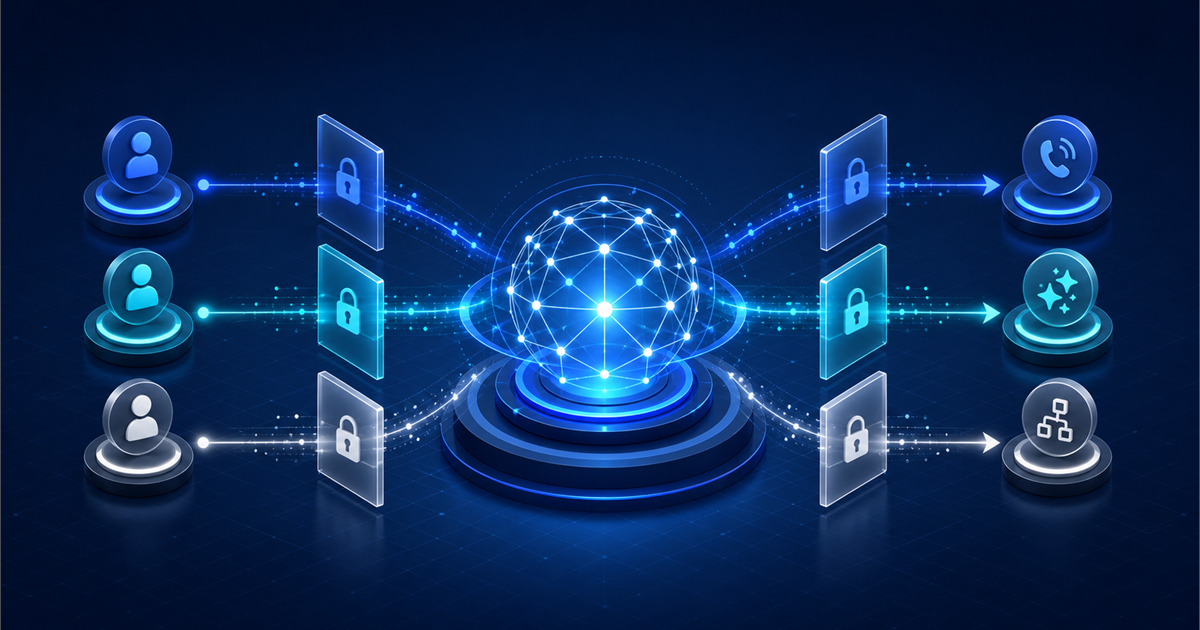
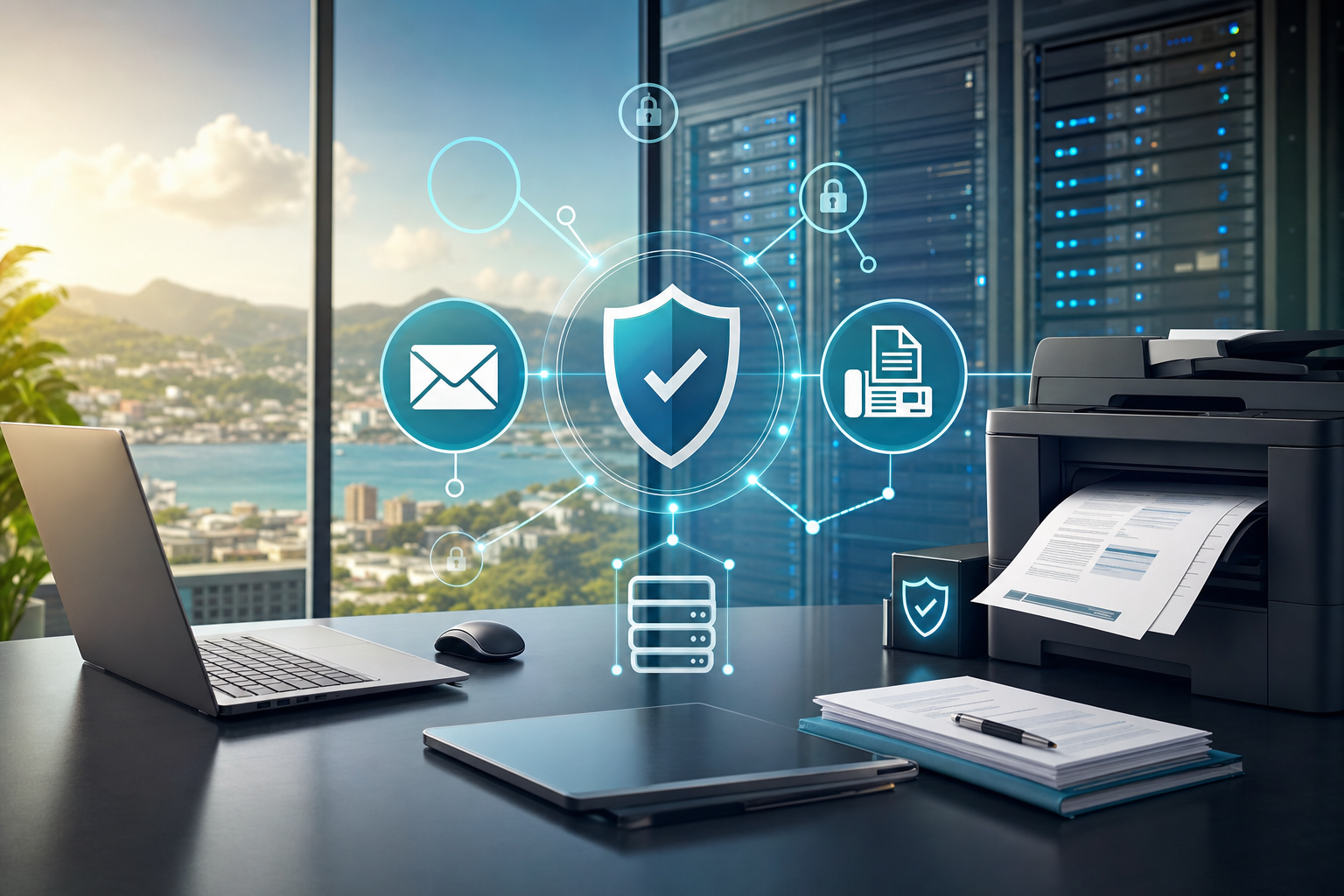
Sensitive Documents Need Secure Network Faxing, Not Inbox Guesswork
Most businesses have quietly moved almost everything into email, WhatsApp, portals, and cloud storage. That works well for speed, but it does not automatically make sensitive document transmission safer.
Medical referrals, signed forms, legal instructions, finance documents, supplier authorisations, customer records, and HR paperwork still need controlled handling. For some organisations, faxing has not disappeared because the business still needs a familiar, point-to-point way to move documents between parties that may not share the same portal or encrypted email system.
A GFI Software article asks whether fax is more secure than email and makes an important distinction: traditional paper faxing has risks, but network faxing can reduce many of the problems that make both email and old fax machines difficult to govern.
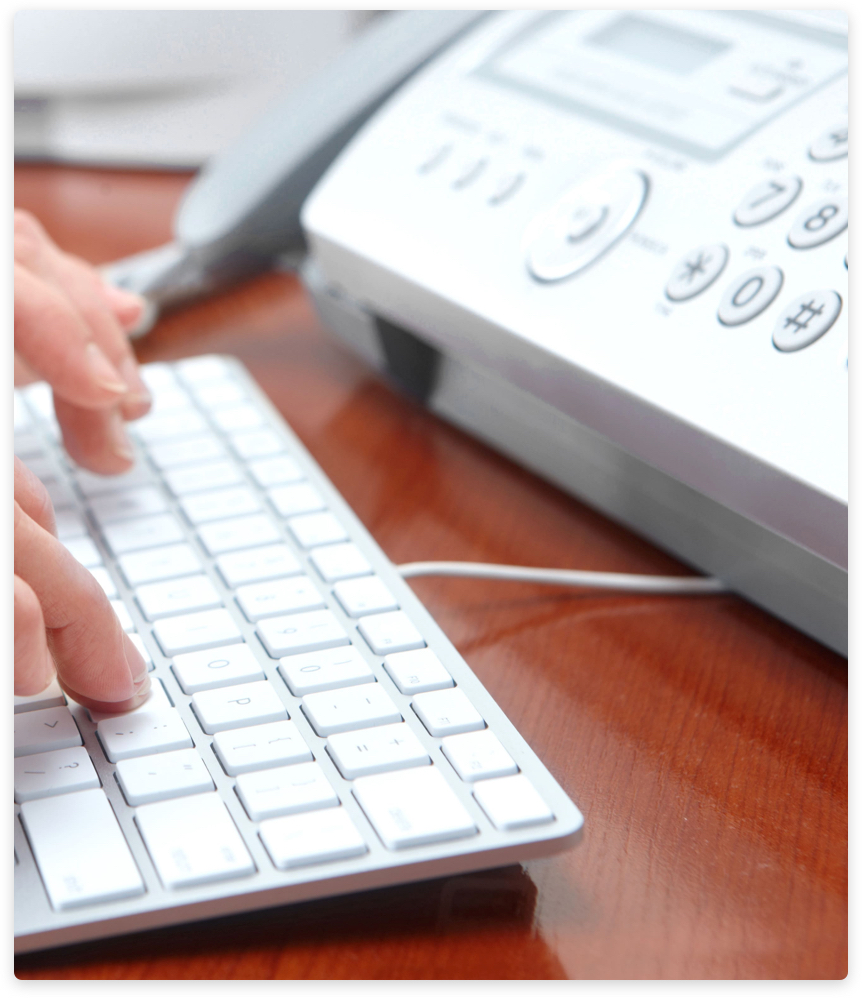
Email is convenient, but it is not automatically controlled
Email is flexible, searchable, and easy for staff to use. It is also one of the most attacked business systems.
A sensitive attachment can be sent to the wrong person. A mailbox can be compromised. A user may forward a document outside the company without thinking. A payment instruction can be mixed into a phishing thread. Important messages may also land in spam or get buried under normal inbox traffic.
Good email security helps, but businesses should still decide which document workflows belong in ordinary email and which need more control.
For Trinidad and Tobago SMBs, this is especially relevant in sectors such as healthcare, professional services, property management, accounting, education, construction, and finance support. These teams often exchange documents with outside offices, suppliers, government agencies, insurers, banks, clinics, attorneys, and customers. Not every party uses the same secure portal.
Traditional faxing also has problems
Old-style fax machines are not a perfect answer. Paper sitting on a shared fax tray can be seen by the wrong person. Manual dialling creates the risk of sending a confidential document to the wrong number. Paper records are hard to index, search, retain, and audit.
That is why the real question is not “fax or email?”
The better question is: which workflow gives the business the right mix of security, usability, auditability, and record control?
Where GFI FaxMaker fits
GFI positions FaxMaker as network fax server software that enables email-to-fax and fax-to-email for Exchange and other SMTP servers in a secure environment. The article also notes that FaxMaker can support physical on-premises fax service, Fax over IP through a gateway or VoIP phone system, or hybrid faxing integrated with a cloud-based faxing system.
For an SMB, the value is practical:
- staff can send faxes from familiar email or web workflows
- incoming faxes can arrive electronically instead of sitting on a tray
- manual scanning and filing can be reduced
- fax activity can be tracked more consistently
- OCR can make received fax content easier to search later
- standard cover pages and confidentiality statements can be applied more reliably
- APIs, alerts, and digital-signature-related workflows can support automation
This is especially useful where fax remains part of the business process, but the company wants less paper, better visibility, and stronger control.
Secure transmission is only one part of the job
A secure document workflow should also consider what happens before and after the document is sent.
Blue Chip would normally review questions such as:
- Who is allowed to send sensitive documents?
- Are recipient numbers and destinations verified?
- Are incoming documents routed to the right people or shared mailbox?
- Are records archived where the business can retrieve them later?
- Are staff trained not to bypass the approved process?
- Is endpoint security in place on the PCs handling the documents?
- Are Microsoft 365, Exchange, VoIP, or gateway settings documented?
- Does the business need retention, audit trails, or compliance reporting?
GFI's article also points to GFI Archiver as a companion for storage and reporting. That matters because sending a document safely is not enough if the business cannot find it later.
Do not keep faxing because “we always did it”
Some businesses keep a fax machine because it has always been there. Others remove fax completely without checking whether certain departments still rely on it.
Both approaches can create problems.
The better approach is to map the real workflow. If fax is still required, modernise it. If email is the better fit, secure it properly. If a portal or document-management system is needed, plan it instead of letting staff improvise.
A good managed IT review can identify which document paths are safe, which are outdated, and which need better controls.
The Blue Chip view
Sensitive documents should not move through the business by habit. Whether the tool is email, fax, a portal, or a line-of-business system, the process should be intentional.
Blue Chip can help review document transmission workflows, email security, VoIP/FoIP readiness, GFI FaxMaker fit, archiving requirements, endpoint protection, and user procedures. The goal is not to add complexity. The goal is to make sensitive communication easier to manage, harder to misuse, and simpler to retrieve when the business needs proof.
If your team still depends on fax, or if sensitive documents are moving through ordinary inboxes with no clear control, it may be time for a practical review.
Source: GFI Software — Are faxes more secure than email?.