
A shared WhatsApp number lets your entire sales team answer customer calls together—without asking customers to save a new contact. By bridging WhatsApp voice calls into your IP PBX, you get ring groups, call transfer, presence indicators, recording and reporting, all on the number your customers already know. The person holding the phone no longer owns the relationship.
The number that belongs to one person
Here's a scenario most sales managers recognise: your top rep has been using their mobile to take WhatsApp calls from prospects for two years. Customers ring that number because it's saved in their phones. The rep goes on holiday, and suddenly nobody can answer those calls. Or worse—the rep leaves, and the number walks out the door with them.
This isn't a flaw in WhatsApp. The app was designed for personal communication. One device, one number, one person. That works brilliantly for individual use. It just wasn't built for a team.
What goes wrong when that person is unavailable
When WhatsApp lives on a single handset, every limitation compounds:
- One call at a time. If someone's already talking, the next caller gets nothing—no queue, no voicemail, just a busy signal or an unanswered ring.
- No transfer. A customer asks a technical question your salesperson can't answer. They have to promise a callback rather than simply putting the caller through.
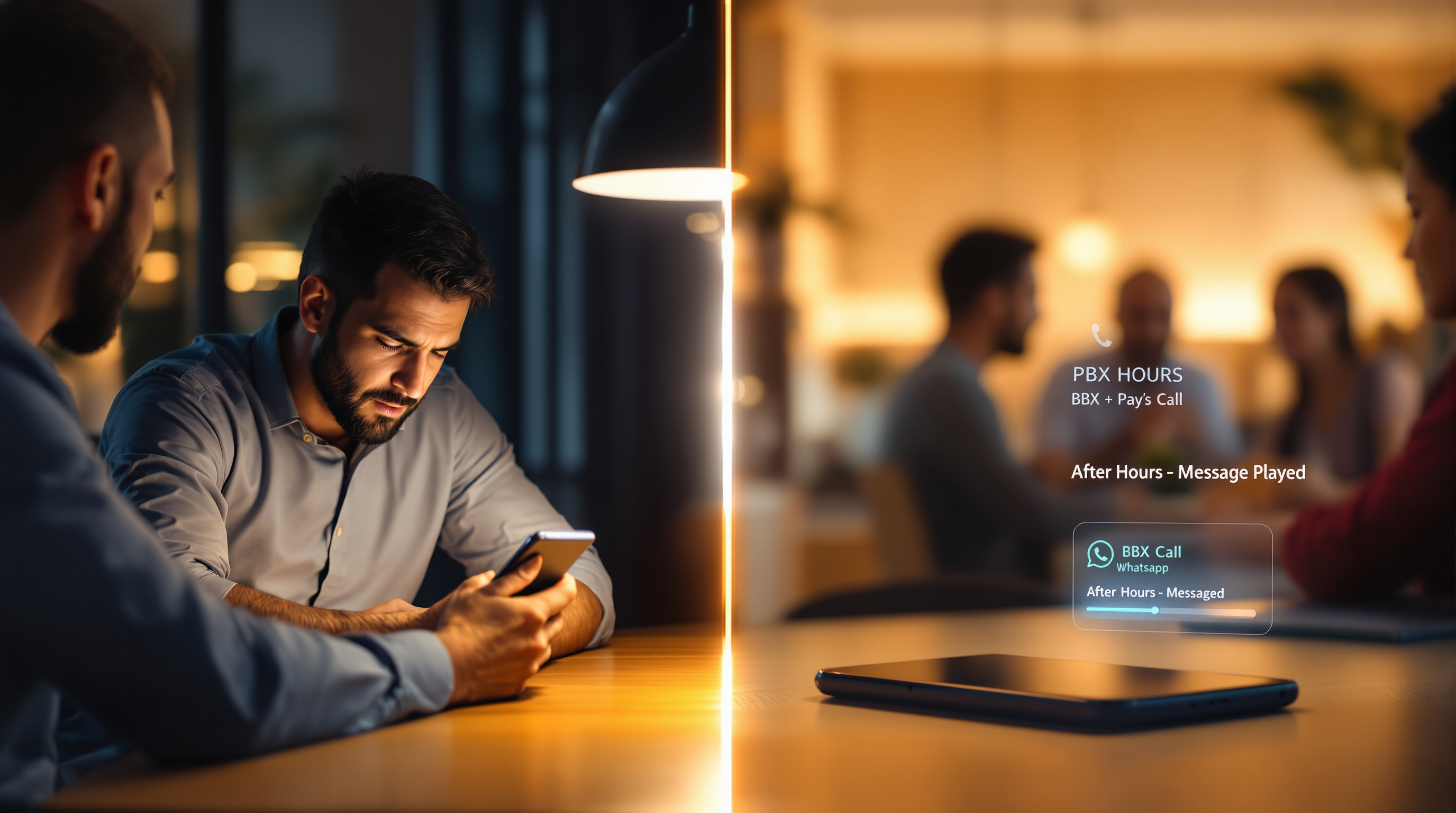
- No business hours. The phone rings at 10pm. Someone answers out of habit, or the customer assumes you're ignoring them.
- No visibility. Management has no idea how many calls came in, who handled them, or what was said. Coaching becomes guesswork.
- No continuity. Staff changes, and suddenly the number customers trust belongs to someone who doesn't work for you anymore.
The instinct might be to issue a second number—a "company" WhatsApp. But then you're asking every existing contact to update their address book. Some will. Many won't.
A shared number, several agents
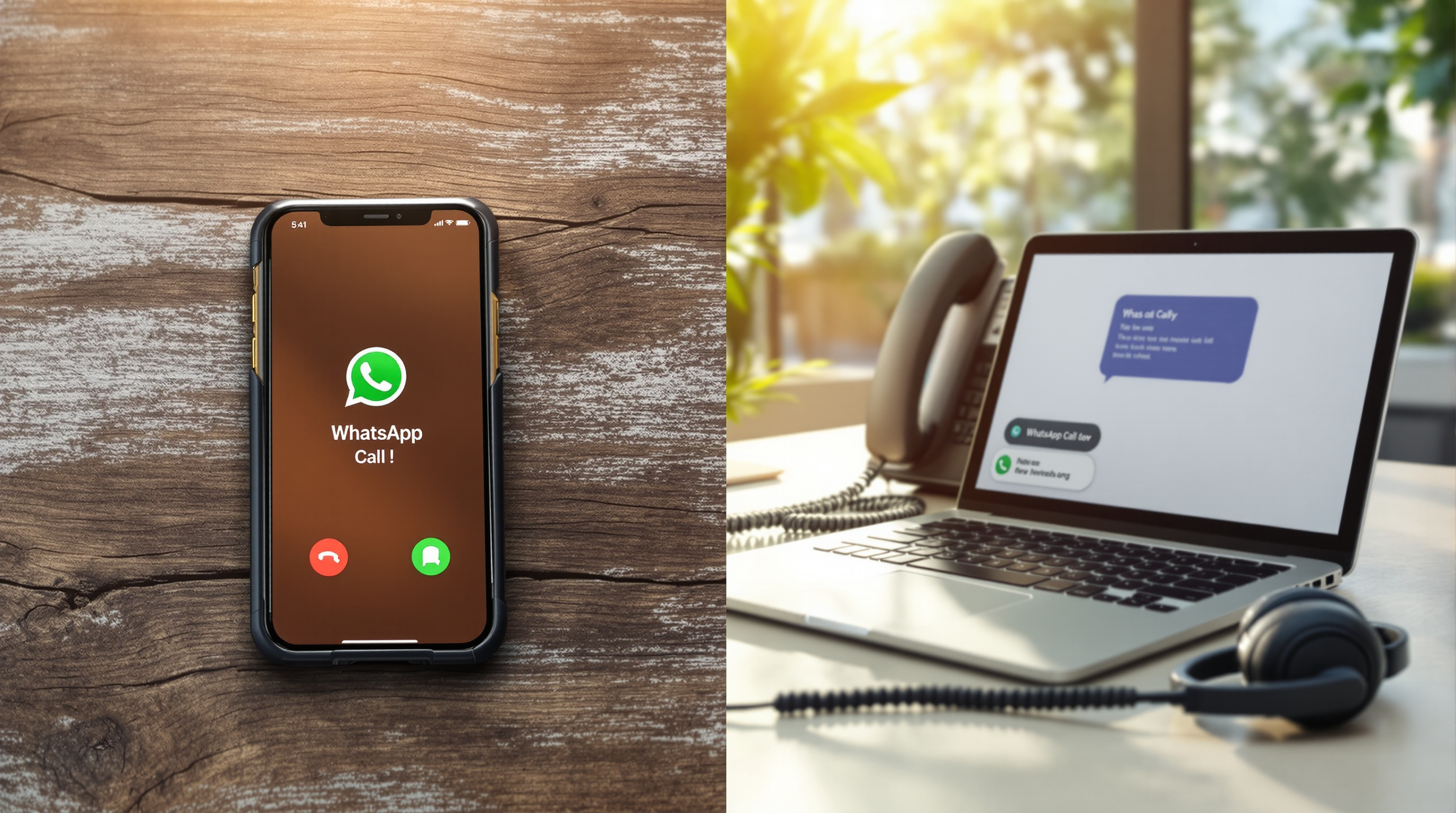
The practical fix is to keep the number customers already have and route it through your PBX. SIP for WhatsApp bridges inbound WhatsApp voice calls into a SIP trunk, so they arrive at your phone system like any other business call.
From there, you can route calls to a ring group (all five salespeople ring at once), a queue (callers wait in line during busy periods), or a specific extension. An AI receptionist can greet callers and direct them—though there's no DTMF menu, since WhatsApp voice calls don't support touch-tone input.
The scalability point matters here: regular WhatsApp and WhatsApp Business apps handle one call at a time per number. The SIP bridge supports simultaneous calls on the same WhatsApp number, sized in blocks of two. Two concurrent calls is the minimum per number. If you have three WhatsApp numbers connected, that's a minimum of six concurrent calls. Your whole team can be on the phone at once, all reachable on the same number your customers already saved.
Transfer, presence and handing a customer over properly
Real teamwork means handing calls off cleanly. With the bridge in place, agents can do blind or attended transfers—put a caller on hold, check if the right colleague is free, then connect them. Presence indicators show who's available, so you're not bouncing a customer around to people who are already on calls or away from their desks.
This is the kind of thing office phone systems have done for decades. The difference is that now your WhatsApp callers get the same treatment. They don't know or care that the call routed through a PBX. They just know someone competent answered and got them to the right person.
Recording and reporting for coaching, not surveillance
If your PBX already records calls and generates CDRs, those policies apply to WhatsApp traffic too. Nothing extra to configure—calls that arrive via the SIP bridge are just SIP calls as far as your phone system is concerned.
For sales teams, this means you can actually review calls during one-on-ones. What objections came up? How did the rep handle pricing questions? Did they remember to confirm next steps? You can't improve what you can't observe.
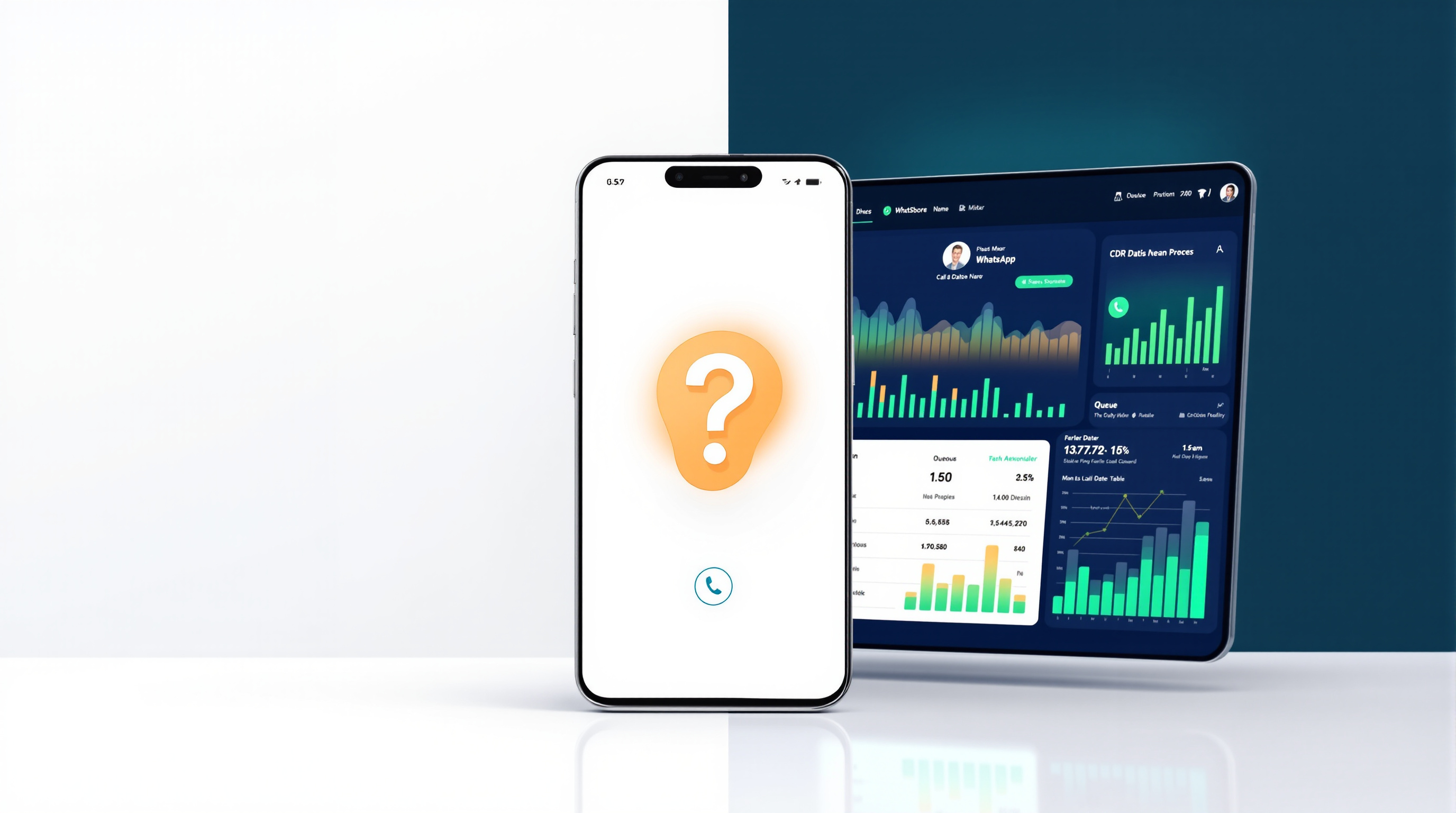
Reporting tells you who handled what: how many calls each agent took, average duration, missed calls, time to answer. If one person is drowning while another barely rings, you'll see it in the data rather than waiting for someone to complain.
Keeping the number when people change
Here's the part that matters most for long-term ownership: the WhatsApp number stays with your organisation, not with whoever happens to be holding a handset.
You register your own WhatsApp or WhatsApp Business number on your own device—typically by scanning a QR code to link the app to the gateway. Blue Chip Technologies Ltd. doesn't host, hold or control your number. You do. The gateway simply bridges calls into your PBX.
When someone leaves, the number doesn't leave with them. When you hire someone new, they log into their extension and start taking calls. Customer relationships stay with the company.
Frequently asked questions
Do my customers need to do anything differently?
No. They keep calling the same WhatsApp number they already have saved. The call routes through your PBX instead of ringing a single handset, but from the customer's perspective nothing changes.
Can we still use the WhatsApp app for messaging?
Yes. The SIP bridge handles voice calls. Chat messages continue to work through the WhatsApp or WhatsApp Business app as normal.
What happens if someone calls when all agents are busy?
The call enters a queue and waits, just like a regular business line. You can configure hold music, position announcements, or overflow to voicemail after a set time.
Which PBX systems does this work with?
Any SIP-based IP PBX—3CX, Asterisk/FreePBX, PortSIP and similar platforms. If your system accepts a SIP trunk, it can accept WhatsApp voice calls via the bridge.
If your sales team is still passing a single phone around—or worse, letting customer relationships live on personal devices—it's worth seeing how a shared number actually works in practice. Blue Chip Technologies Ltd., based in Trinidad & Tobago, provides the gateway and local support; you keep full control of your WhatsApp number throughout.
Visit the SIP for WhatsApp solution page to see the technical details and request a quote.
Get in touch:
- Phone: 1 (868) 609-2288
- WhatsApp: wa.me/18686092288
- Email: [email protected]
- Contact page: bluechiptt.com/contact